Table of Contents
Hand-Knotted Rugs: The Ultimate Guide to Investment Pieces
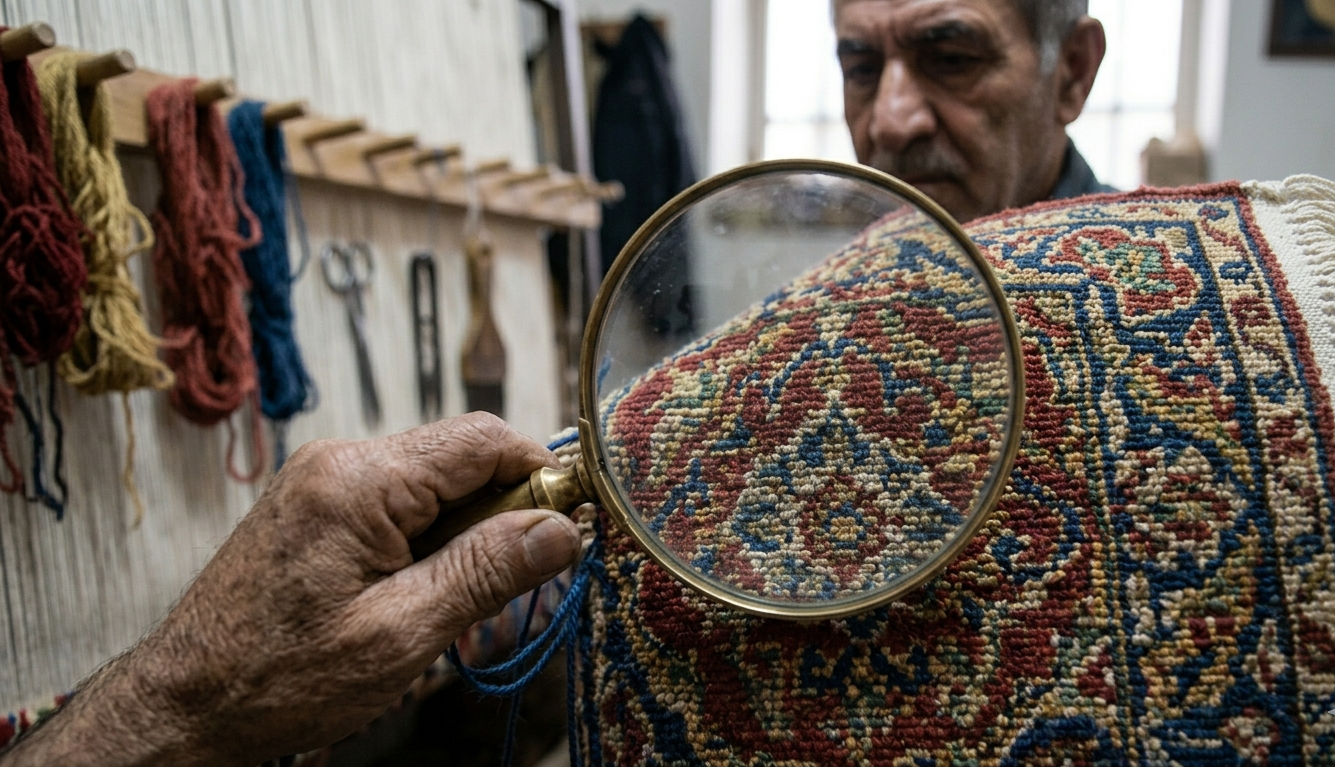
Hand-knotted rugs are more than just floor coverings; they are the heartbeat of a room. Unlike the sterile rows of machine-made carpet, the back of a hand-crafted piece displays intense human labor. Perhaps you have wondered why two similar-looking pieces carry a $5,000 price gap. According to appraisers at the International Society of Appraisers, the secret lies entirely within those individual knots.
Think of hand-knotted rugs as hand-tailored suits, whereas factory floorings are fast-fashion t-shirts. In practice, artisan craftsmanship relies on a strong foundation—a skeleton of threads locking every knot securely in place. Framing this durability correctly transforms a daunting purchase into a smart investment. Industry data reveals these heirloom pieces boast a remarkably low “cost per year,” gracefully surviving decades of daily footsteps.
Beyond the Surface: Differentiating Hand-Tufted from Artisan Woven Carpets
When comparing store-bought rugs to heirloom pieces, the secret to their price difference hides underneath. Differentiating hand-tufted carpets from artisan woven carpets usually comes down to one major red flag: a canvas back secured by latex. Hand-tufted rugs use a tool to punch yarn into fabric, relying completely on chemical glue to hold the fibers together. Within ten years, this latex backing dries out and crumbles.
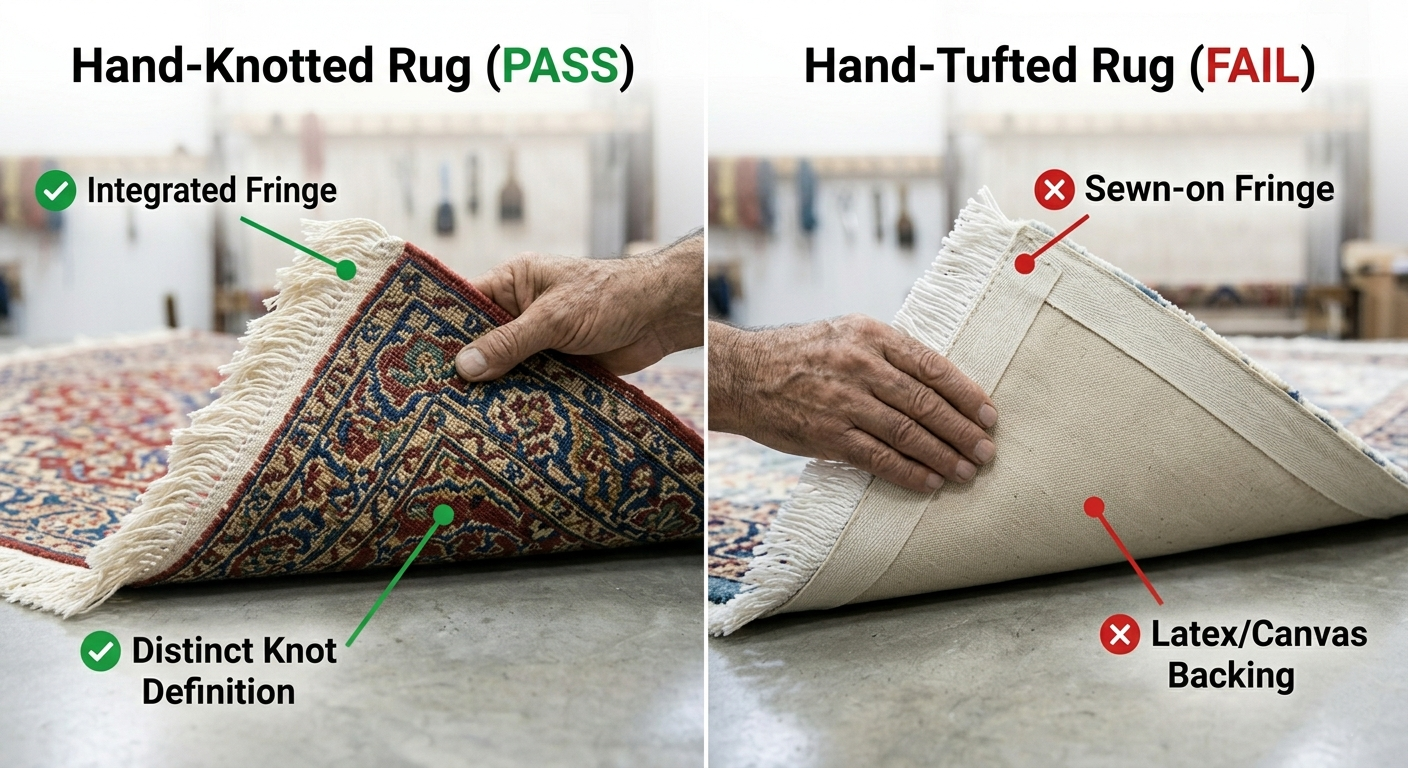
Conversely, authentic oriental rugs rely on a “warp and weft foundation structure”—an interlaced skeleton of vertical and horizontal threads locking every single knot in place for half a century or more. You can verify this craftsmanship by mastering the “Flip Test” using this three-step checklist:
- Fringe check: Ensure the fringe is the internal skeleton extending out, rather than a sewn-on decoration.
- Back texture: Feel for the bumpy rows of individual knots instead of a stiff canvas.
- Pattern clarity: Confirm the back perfectly mirrors the front’s intricate design.
The High-Resolution Floor: How KPSI and Persian Knots Determine Longevity
Imagine a television screen: more pixels create a sharper picture. Hand-knotted rugs work identically through knots per square inch (KPSI). Calculating this density helps verify price fairness and physical resilience. Higher KPSI packs fibers densely together, preventing heavy furniture from crushing the pile. This tight construction drives the impact of KPSI on textile durability, ensuring your investment easily survives decades of heavy foot traffic.
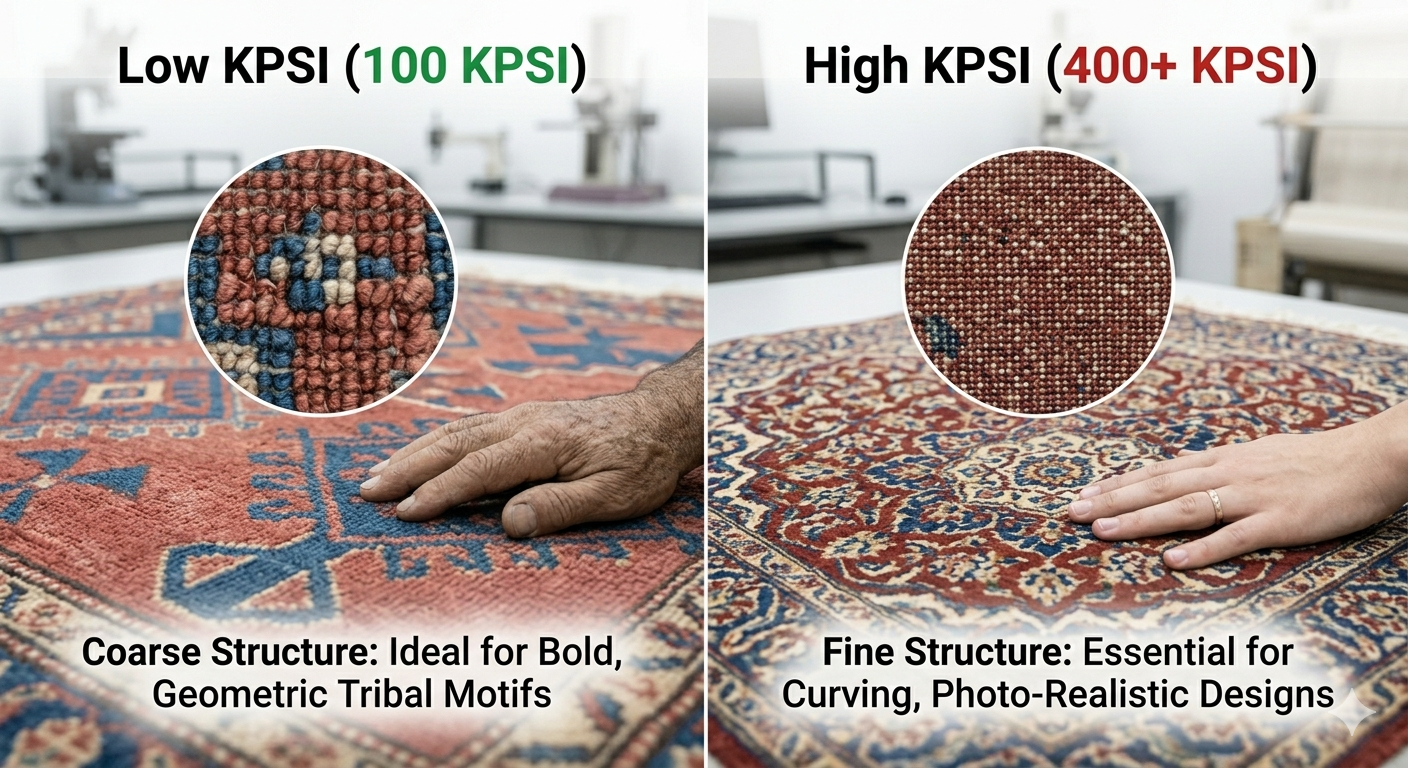
Crafting these intricate designs requires specialized techniques, often seen in Kashmiri silk carpets. Unlike blocky, symmetrical loops, the distinctive characteristics of asymmetrical Persian knots (or Senneh knots) allow artisans to weave elegant, sweeping curves. You can evaluate a rug’s complexity and intended style by checking its KPSI ranges:
- 50–150 KPSI: Ideal for bold, geometric tribal patterns with a thick, rustic feel.
- 150–300 KPSI: The standard for traditional parlor rugs featuring clear, curving details.
- 300+ KPSI: Ultra-fine density reserved for highly intricate, photo-realistic floral motifs.
Counting these tiny components reveals the staggering human labor behind your floor covering. Yet, the world’s tightest structure will still fail if tied with inferior yarn.
Nature’s Built-in Stain Guard: Why Highland Sheep Wool and Organic Dyes Matter
Once you bring a handmade masterpiece home, protecting it begins from the bottom up. Skipping a foundation layer accelerates wear, making choosing the right rug pad essential.
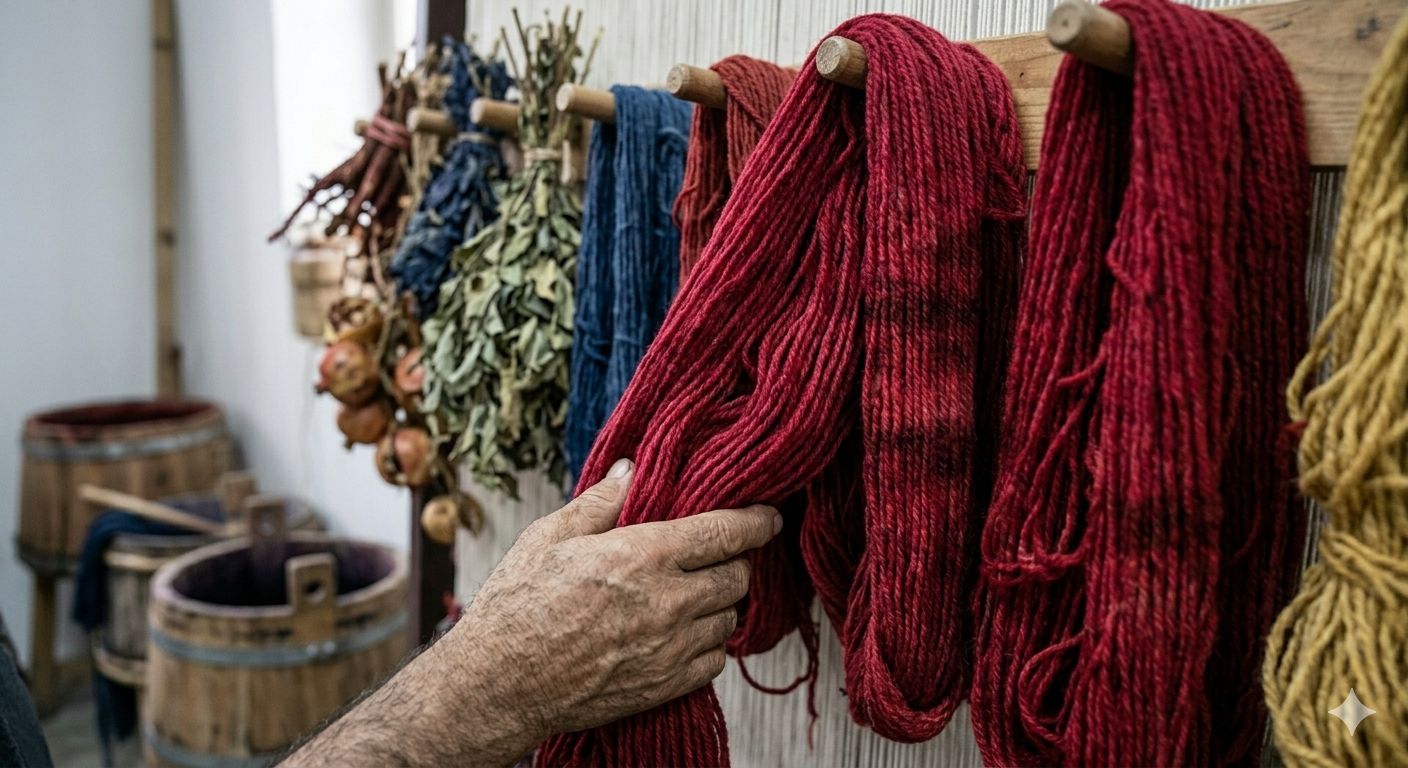
Coloring methods further separate true heirlooms from mass-produced copies. Weavers utilize organic vegetable dyes in traditional weaving, extracting vibrant hues from roots and plants. Because hand-spun wool absorbs these natural pigments unevenly, subtle horizontal color shifts often appear. This gentle striping, called “abrash,” is a prized hallmark of authentic botanical dyes.
Determining Rug Value: From Tribal Motifs to Resale Potential
Understanding a rug’s worth requires looking beyond the showroom. Determining rug age by weave pattern and material wear separates graceful aging from actual damage. While dry rot destroys a textile’s structural foundation, a coveted “patina”—the gentle, natural softening of original dyes—often increases the resale value of authentic Persian masterpieces.
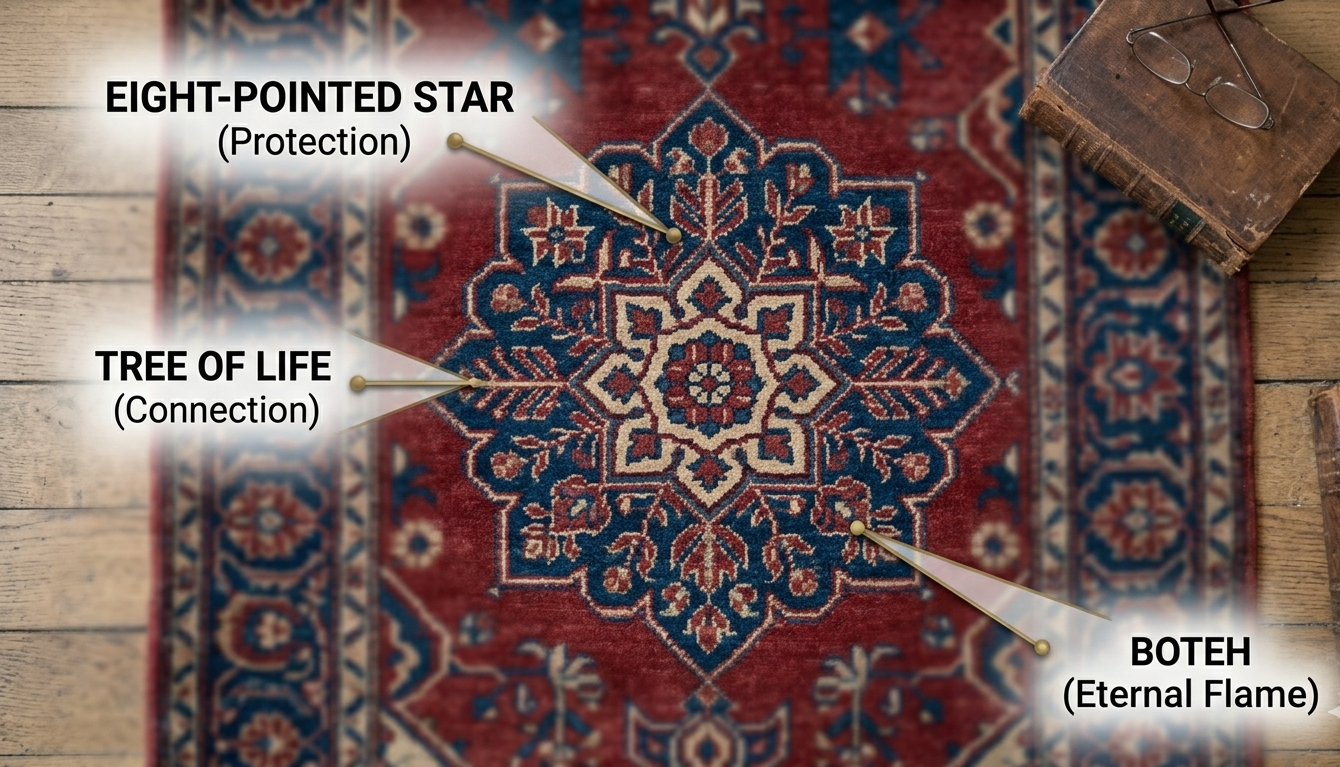
Beyond age, the cultural significance of tribal weaving motifs turns a carpet from a mere floor covering into a historical document. Artisans weave specific, recognizable narratives using traditional symbols:
- Boteh (Paisley): Represents the universe or an eternal flame.
- Gul (Medallion): An elephant footprint denoting tribal identity.
- Tree of Life: Symbolizes the connection between earth and heaven.
- Eight-Pointed Star: Offers the owner protection against the evil eye.
Recognizing valuable patina and decoding ancient symbols empowers you to evaluate secondary market potential with confidence.
Preserving Your Heirloom: Preventing Damage and Maintaining Fiber Integrity
Once you bring a handmade masterpiece home, protecting it begins from the bottom up. Skipping a foundation layer accelerates wear, making choosing the right rug pad essential.
Daily wear requires specific vigilance to avoid costly restoration. Never use standard steam cleaners on natural wool; harsh heat strips protective lanolin oils. Instead, focus on preserving fiber integrity through specialized cleaning by a professional facility. At home, prioritize preventing moth damage in heirloom textiles by regularly checking dark areas beneath heavy furniture for sticky webs or sandy casings—early detection saves thousands in re-weaving costs.
Establish this seasonal maintenance checklist:
- Vacuuming: Use suction only (disable the rotating beater bar) to protect the fringe.
- Rotation: Turn the rug 180 degrees for even foot traffic and light exposure.
- Inspection: Check bindings yearly; promptly repairing frayed edges on antique carpets stops severe unraveling.
Evaluating and Purchasing with Confidence
You no longer need to view hand-knotted rugs as intimidating. By shifting from the immediate sticker price to the true “cost per year,” you can confidently evaluate artisan woven carpets as multi-generational investments rather than disposable decor.
Your Buying Confidence Checklist:
- Execute the “Flip Test” to spot irregular, human-tied knots.
- Ensure the fringe extends directly from the foundation.
- Verify natural wool or silk materials.
- Confirm dye sources with the seller.
- Finalize your budget based on lifetime value.
Visit our shop
or contact us to find a lasting masterpiece for your home.
FAQs about Hand Knotted Rugs
What are hand knotted rugs?
Hand knotted rugs are carpets that are crafted by tying individual knots into a foundation of warp and weft threads. Unlike machine-made rugs, these handmade rugs showcase artisan craftsmanship, unique designs, and superior durability.
How do I identify a genuine hand knotted rug?
To identify a genuine hand knotted rug, use the “Flip Test.” Check for uneven, individual knots on the back, and ensure the fringe extends from the base rather than being sewn on. This will help distinguish authentic artisan craftsmanship from machine-made options.
What is the significance of KPSI in hand knotted rugs?
KPSI, or knots per square inch, is a critical factor in determining the quality and durability of hand knotted rugs. Higher KPSI indicates a denser weave, which generally leads to more resilient rugs that can withstand heavy foot traffic and last for generations.
Why should I choose wool for my hand knotted rug?
Wool is the preferred material for hand knotted rugs due to its natural durability, stain resistance, and luxurious feel. High-quality wool contains lanolin, which repels spills, making it easier to maintain your handmade rugs over time.
What types of motifs can I find in hand knotted rugs?
Hand knotted rugs often feature intricate tribal motifs and designs that reflect the culture and traditions of their makers. Common symbols include the Boteh (Paisley), Gul (Medallion), and Tree of Life, each carrying its unique meaning and history.
How do I care for my hand knotted rug?
To care for your hand knotted rug, regularly vacuum using a suction setting and rotate it every few months to promote even wear. For deeper cleaning, consider having it professionally cleaned to maintain its beauty and integrity.
Are hand knotted rugs worth the investment?
Yes, hand knotted rugs are a worthwhile investment due to their craftsmanship, durability, and potential for appreciation over time. They are often considered heirloom pieces, adding aesthetic and historical value to your home.