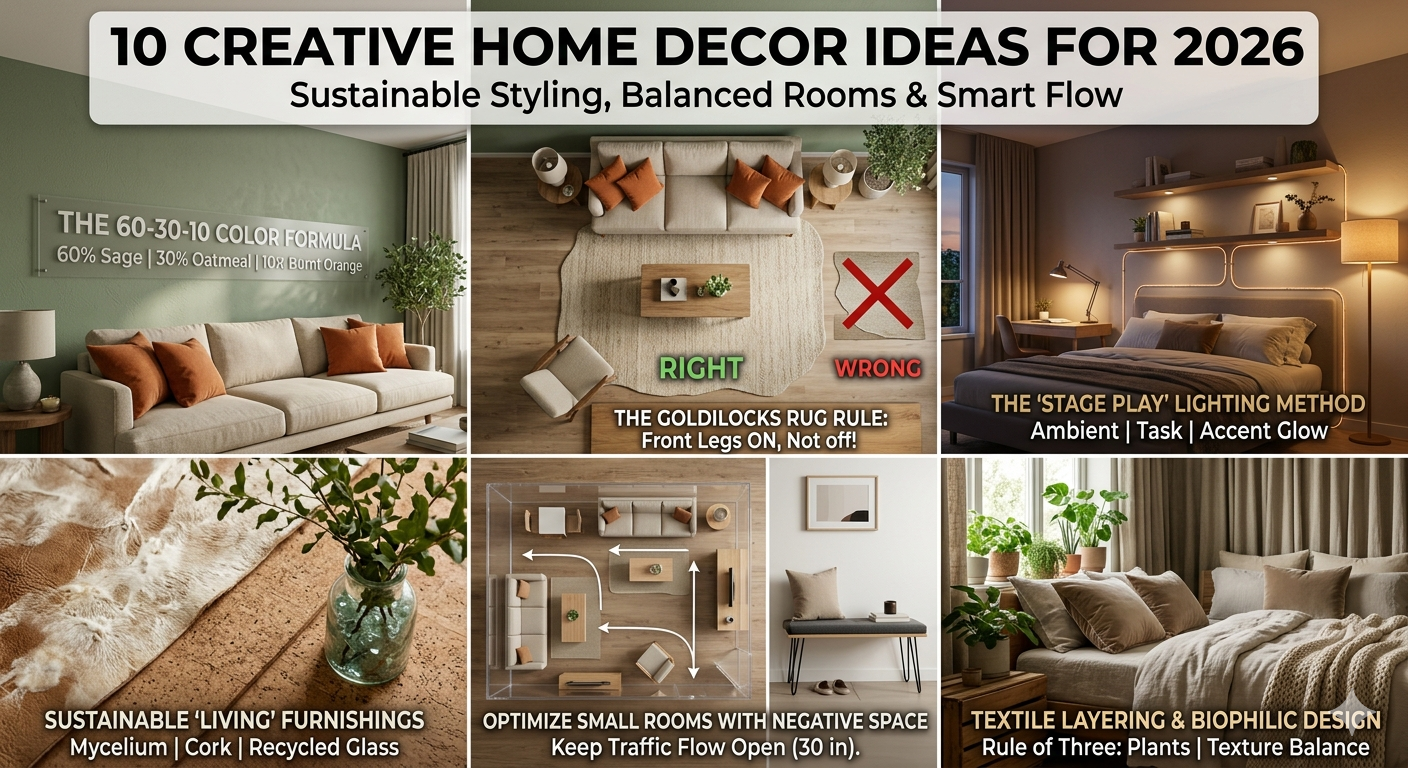
Mastering home decor isn’t about possessing expensive “good taste.” Instead, applying basic interior design principles is a straightforward, rule-based skill that helps a space tell your personal story. As a result, the 10 creative home decor ideas shaping 2026 will intentionally shift focus toward sustainable styling and everyday comfort.
Say goodbye to redesign overwhelm. By learning the 60-30-10 color formula, the Goldilocks rug sizing rule, and the Stage Play lighting method, you will finally understand exactly why a room works.
Stop the ‘Color Clutter’ with the 60-30-10 Rule
Choosing a color palette for your living space without creating the “Dreaded Beige” room comes down to the 60-30-10 color rule. Think of this formula like a sharp outfit—your suit, shirt, and tie. (If you want a quick visual explanation, see this 60-30-10 rule guide.)
This foolproof ratio effortlessly balances any room:
- 60% Main Color: Your “suit” (walls and large furniture) firmly grounds the space.
- 30% Secondary Color: Your “shirt” (curtains or a side chair) supports the foundation.
- 10% Accent Color: Your “tie” (throw pillows or artwork) delivers a bold pop.
Keeping vibrant shades to just ten percent means you can easily swap accents seasonally on a tight budget.
Fix the ‘Postage Stamp’ Rug Problem with the Goldilocks Rule
A tiny rug floating alone is a frequent mistake in economy home decor, leaving large spaces looking disconnected and cheap. If you’re shopping for a new foundation piece, start with the Indian Carpets shop and narrow down by style (for example, tufted carpets, round tufted carpets, shaggy carpets, round shaggy carpets, irregular carpets, or Kashmiri silk carpets).
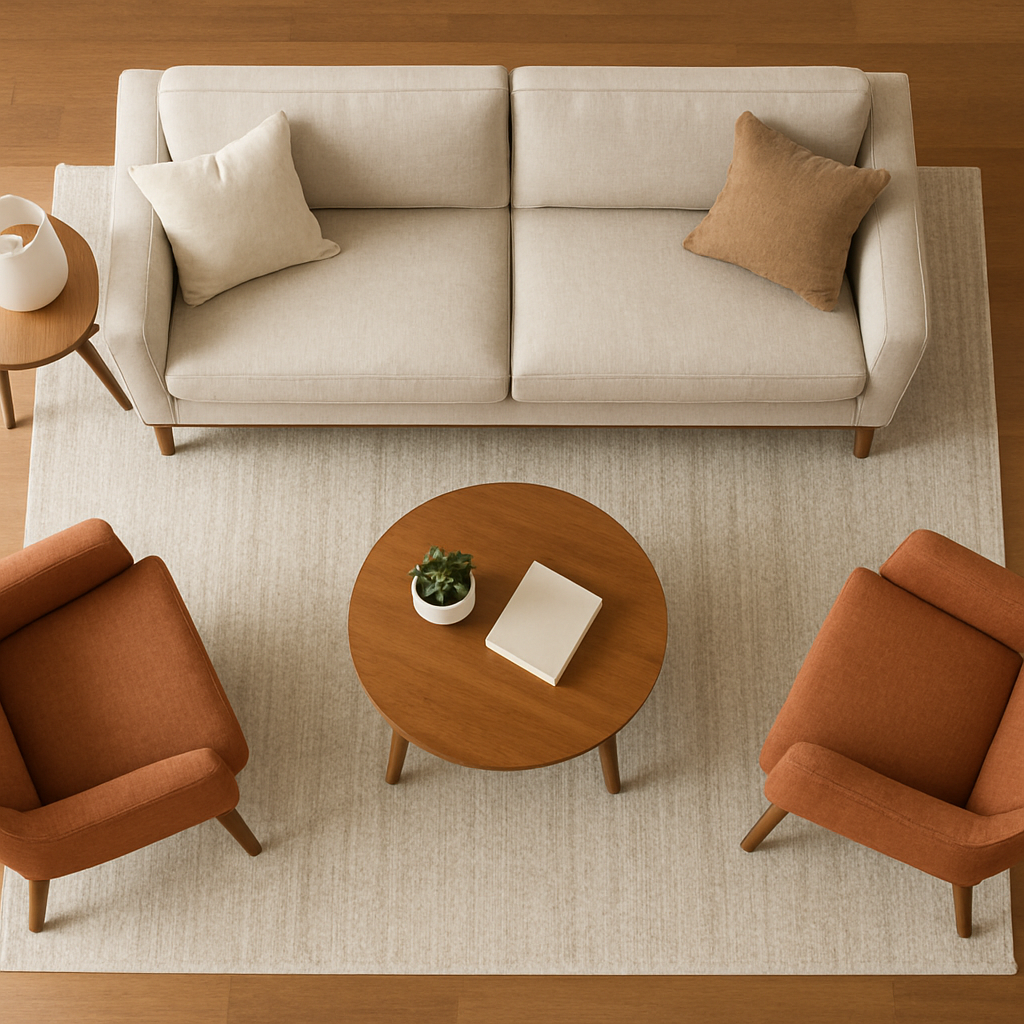
To choose the right rug size for a room, apply the “Front Legs On” rule. Grounding a space requires furniture contact points—at least the front feet of your seating must rest on the fabric.
This simple trick acts like an invisible wall, cleanly separating living and dining zones in open plans.
Transform a Flat Room into a 3D Experience with the ‘Stage Play’ Lighting Method
Relying on one harsh ceiling fixture makes cozy spaces feel like waiting rooms. Better home decor lighting builds a foundational “glow.” Scattering different types of ambient lighting, like warm floor and table lamps, instantly eliminates heavy shadows.
The next layer provides a functional “spotlight” for your habits. Adding task lighting, such as a focused desk lamp, puts brightness exactly where you read or work to effectively reduce eye strain.
Finally, add the “jewelry” of accent lighting. Aiming an inexpensive puck light at a basic bookshelf effortlessly transforms it into a custom gallery. (For energy-efficient options, you can reference ENERGY STAR lighting guidance.)
Future-Proof Your Home with Sustainable ‘Living’ Furnishings
Replacing cheap “fast furniture” saves money long-term and improves your home’s air quality. Flimsy fake veneers often cause “off-gassing”—a chemical smell from cheap glues—so choose solid wood or sustainable and eco-friendly furnishings instead. (Learn more about VOCs and indoor air quality from the U.S. EPA.)
The 2026 “biophilic” trend simply means bringing nature indoors. Whether you prefer clean Scandinavian or industrial design styles, try blending these natural materials:
- Mycelium/Mushroom ‘leather’
- Cork flooring
- Recycled glass accents
Investing in these durable items stops the frustrating cycle of tossing broken pieces. (If you want a deeper overview of the concept, see 14 Patterns of Biophilic Design.)
Optimize Small Room Layouts Using ‘Negative Space’
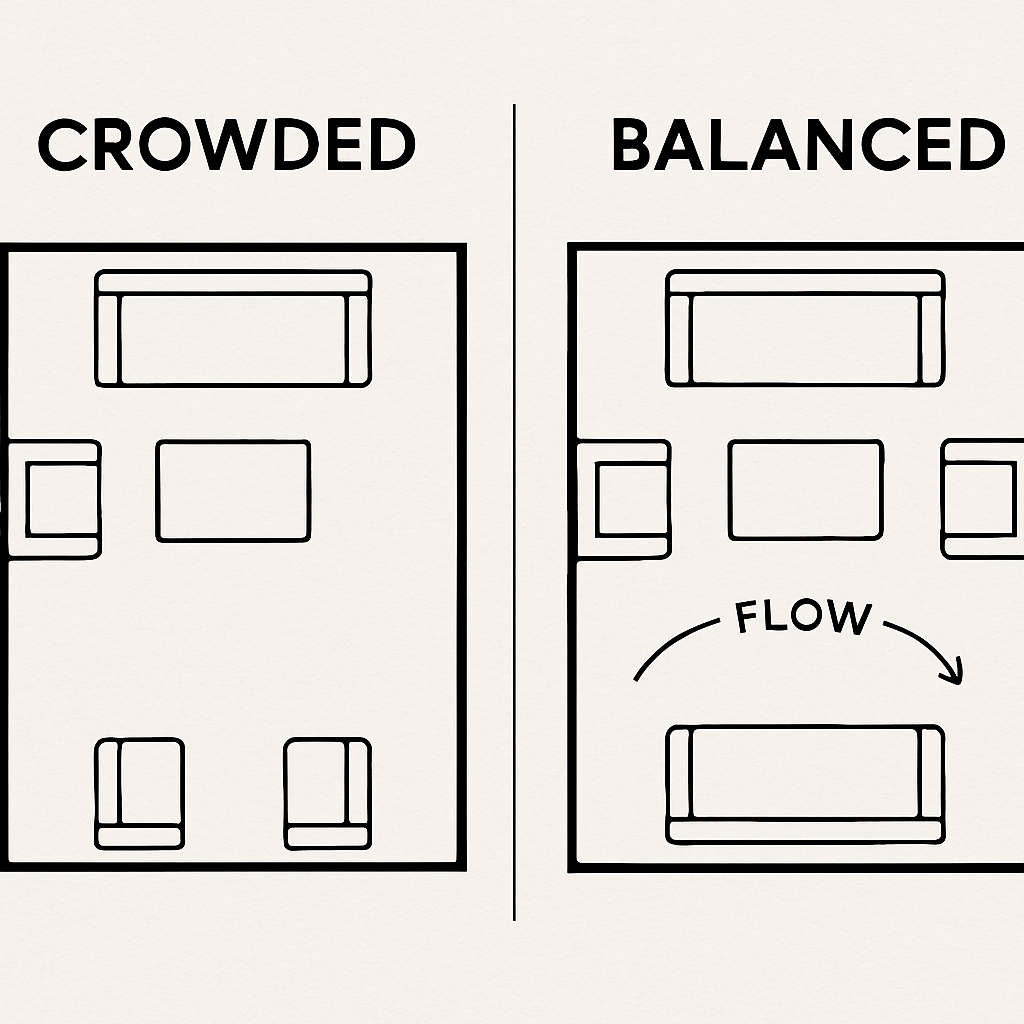
When searching for budget-friendly apartment styling tips, you might be tempted to shove furniture against the walls. Instead, embrace “negative space”—the empty floor area that lets a room breathe.
To optimize small room layouts, ensure your “traffic flow” walking paths are 30 inches wide. Swap bulky pieces for “leggy” furniture raised on pegs to naturally trick the eye into seeing more square footage.
Once the floor feels open, move everyday items upward onto vertical floating shelves.
Build a Professional Gallery Wall Without the Stress
Empty walls feel intimidating when exploring home decor ideas. To curate a gallery wall for beginners, choose a tidy “Grid” of matching frames or an “Eclectic,” scattered but balanced layout.
Center your display using the “57-inch rule,” placing the middle at standard eye level. Tape paper templates up first to prevent extra nail holes, keeping a strict two-inch gap between pieces.
Mix canvas, wood, and glass textures to add instant depth.
The Secret to a Magazine-Ready Bedroom: Textile Layering
A beautifully made bed can still feel unexpectedly cold. The practical fix is textile layering for cozy bedrooms—stacking fabrics to add “visual weight,” making spaces look comfortably full.
Regardless of minimalist vs maximalist interior aesthetics, mixing textures creates instant balance. Pair “rough” linen sheets with “smooth” velvet pillows, or drape a simple throw blanket—the cheapest luxury upgrade.
Finish by hanging airy cotton curtains to gently filter sunlight or heavy drapes to block it. For an easy, high-impact texture upgrade underfoot, consider statement rugs like Concord carpets or plush shaggy carpets.
Create an Ergo-Friendly Home Office That Doesn’t Look Like a Cubicle
Working from the sofa ruins your back, but a corporate cubicle ruins your living room’s vibe. The secret to an ergo-friendly home office setup is the “90-Degree Rule.” Keep your elbows and knees at right angles to prevent joint pain. (For workstation basics, see OSHA’s computer workstation guidance.)
Achieving this functional comfort in your interior design doesn’t require an ugly rolling seat. A structured dining chair paired with a firm lumbar pillow works beautifully.
Use under-desk cord organizers to hide messy cables and eliminate visual clutter.
Breathe Better with Function-First Indoor Plants
Bringing nature inside—known as biophilic design—does more than look pretty. Low-maintenance 2026 favorites like the ZZ Plant for low light, the Rubber Tree for bright light, and the versatile Spider Plant even act as natural winter humidifiers.
To incorporate indoor plants for air quality into your home decor, apply the “Rule of Three.” Grouping pots in odd numbers instantly feels professionally styled.
Invest in One ‘Anchor’ Piece to End the Cycle of Cheap Furniture
Replacing wobbly sofas continually drains your home budget. Basic interior design principles suggest building rooms around an “anchor”—a heavy-use investment piece that establishes your foundation.
Skip trendy colors and prioritize timeless furniture pieces worth investing in, like a sturdy neutral couch. You can easily swap affordable accent pillows when fads change.
Embrace the “cost-per-use” mindset: a $1,000 sofa lasting ten years beats a $400 one replaced constantly.
Your 2026 Design Action Plan: From Picking a Palette to Lighting Your Success
Applying interior design rules is a continuous journey; your room doesn’t need to be finished in a single weekend.
To start using these budget-friendly apartment styling tips today, use this starter checklist:
- Measure for a rug (or explore custom rugs if your space needs an exact fit).
- Pick a 60-30-10 palette.
- Add one task lamp.
Trust your newly trained eye—you can make small, affordable adjustments today and see an immediate, noticeable difference. Ultimately, “done” is better than perfect; the most inviting homes always feel deeply personal, never like stiff showrooms.
If you want more rug and styling inspiration, you can browse Indian Carpets blog posts, visit the Indian Carpets home page, or contact the team.