
Table of Contents
The Ultimate Rug Size Guide: Finding the Perfect Dimensions for Every Room
Standard rug sizes are essential for anchoring furniture and balancing room proportions. The most common dimensions include 5×8, 8×10, and 9×12 feet. This guide provides exact measurements in inches and centimeters, along with professional placement guidelines for living rooms, bedrooms, and dining areas. Learn how to use standard rug dimensions to define spaces and improve interior flow.
Have you ever walked into a room and felt like the proportions were slightly off, even though the furniture was beautiful? More often than not, the culprit is a poorly sized rug. Rugs act as the foundation of interior design; they define boundaries, anchor furniture, and provide a sense of “completion” to a space.
Choosing between standard rug sizes isn’t just about what fits on your floor, it’s about how the rug interacts with your furniture and the “negative space” around it. In this comprehensive guide, we will break down standard rug dimensions in feet, inches, and centimeters, and provide professional placement strategies to help you transform your home into a balanced, inviting sanctuary.
Why Rug Size Matters: The Psychology of Space
Before looking at the numbers, it is vital to understand the “why.” In interior design, a rug serves as a visual anchor. Large standard area rug sizes draw the eye outward, making a small room appear more expansive. Conversely, a tiny rug in a large room creates a “floating” effect, where furniture looks disconnected and ungrounded.
By matching the right common rug dimensions to your specific floor plan, you aren’t just decorating; you are architecting the flow of your home. Explore premium handcrafted collections at Indian Carpets Shop for beautifully designed rugs that elevate every space.
Quick Reference: Standard Rug Sizes Chart
For immediate planning, use this chart to compare common rug dimensions used across the industry.
| Size (Feet) | Standard Rug Sizes in Inches | Standard Rug Sizes in CM | Best For |
|---|---|---|---|
| 3’ x 5’ | 36″ x 60″ | 91 x 152 cm | Entryways, bedside, or kitchen sinks |
| 5’ x 8’ | 60″ x 96″ | 152 x 244 cm | Small seating areas, nurseries, home offices |
| 6’ x 9’ | 72″ x 108″ | 183 x 274 cm | Mid-sized living rooms or queen beds |
| 8’ x 10’ | 96″ x 120″ | 244 x 305 cm | Standard living room rug size; most popular |
| 9’ x 12’ | 108″ x 144″ | 274 x 366 cm | Large open-concept spaces or king beds |
| 10’ x 14’ | 120″ x 168″ | 305 x 427 cm | Standard large rug sizes for Great Rooms |
Living Room Rug Sizes: Creating a Conversation Hub
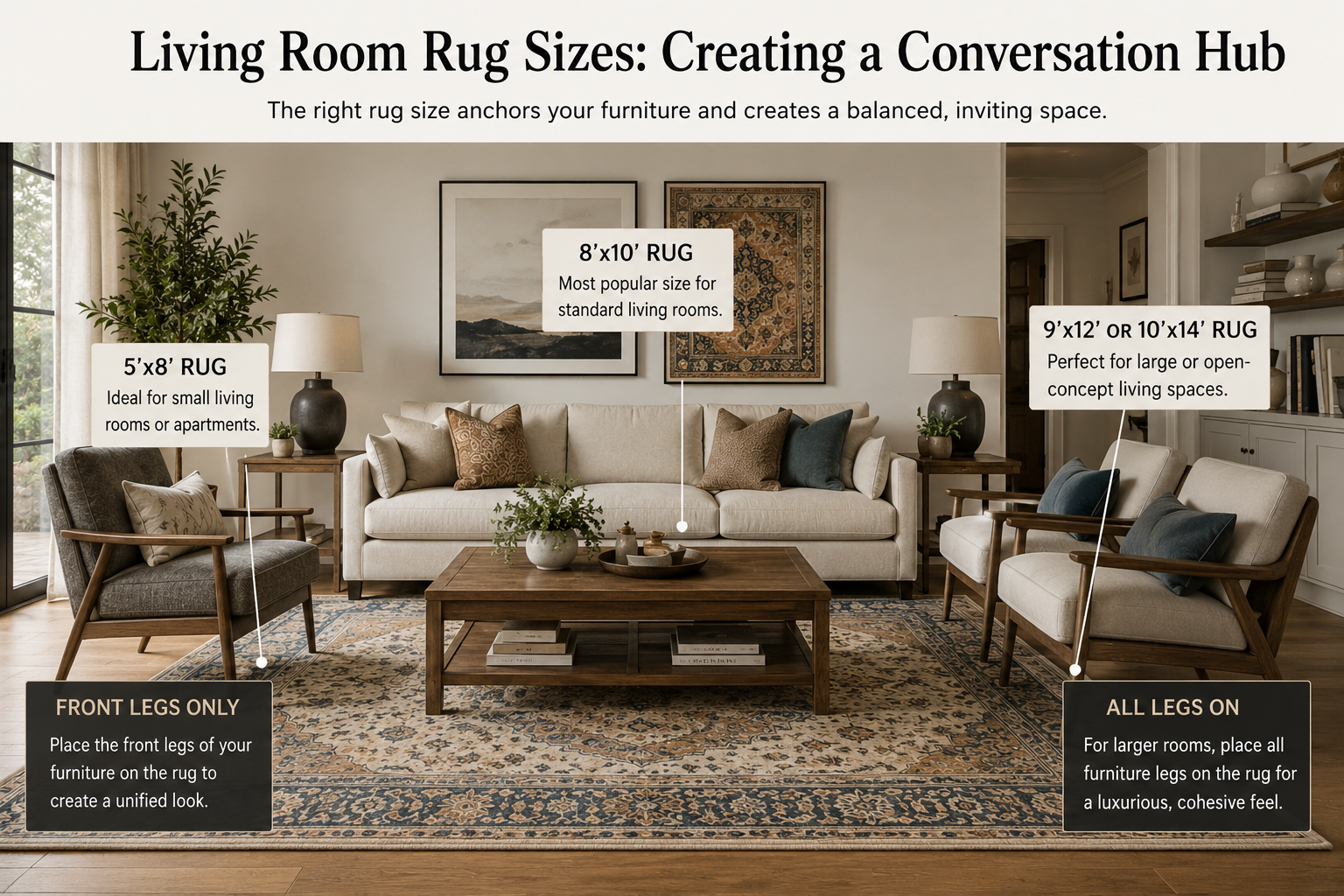
The living room is the most common place where homeowners struggle with area rug sizes. A rug that is too small (often called the “postage stamp” effect) makes the room look fragmented.
The “Front Legs Only” Rule
The most common approach for an 8’x10’ rug is to place the front legs of your sofa and accent chairs on the rug, with the back legs off. This physical connection links the furniture pieces, creating a unified “conversation zone.” It is an ideal setup for mid-sized rooms where you want to show off a bit of your hardwood or tile flooring.
Browse elegant handcrafted options in the Living Room Rugs Collection for modern and luxury interiors.
The “All Legs On” Approach
In expansive floor plans or “Great Rooms,” you may want to move toward standard large rug sizes, such as 9’x12’ or 10’x14’. Placing all four legs of every furniture piece on the rug creates a luxurious, high-end hotel feel. This is particularly effective when using hand knotted rugs, as the density and craftsmanship of the piece deserve to be the centerpiece of the room.
Explore luxurious handmade textures in the Hand Tufted Carpets Collection.
Small Living Rooms and Apartments
If you are working with a compact apartment, a 5’x8’ rug can work if you “float” the furniture around it, meaning no legs touch the rug except perhaps a central coffee table. For these modern, tighter spaces, modern rugs with bold, clean lines can help the room feel more expansive and less cluttered.
Minimalist and artistic designs from Irregular Carpets work beautifully in compact modern interiors.
Dining Room Rug Sizes: The Chair Safety Zone

In the dining room, size is a matter of safety and functionality as much as it is about style. The biggest mistake people make is choosing a rug that is only as large as the tabletop.
The 24-Inch Clearance Rule
To find your ideal size, measure your table and add 24 to 30 inches of rug to each side. When a guest pulls out their chair to sit down, you want the chair legs to stay on the rug.
If the chair catches on the edge of the rug, it causes a tripping hazard and can damage the rug’s edges over time.
Rectangular Tables: Most 6-chair tables require an 8′ x 10’ rug. An 8-chair table almost always needs a 9’x12’ rug.
Round Tables: To maintain symmetry, pair a round table with round rugs. A 5-foot round table usually pairs best with an 8-foot round rug.
Oval Tables: For a unique touch that follows the room’s flow, oval rugs are an excellent alternative to standard rectangles, mirroring the soft edges of the furniture.
Find elegant styles for dining interiors at Dining Room Rugs and premium circular designs at Round Tufted Carpets.
Bedroom Rug Sizes: Designing for the First Step
The primary goal of a bedroom rug is comfort. You want your feet to land on a warm, soft surface rather than a cold floor when you wake up in the morning.

Placement Under the Bed
The professional standard is to slide the rug about two-thirds of the way under the bed, stopping just before your nightstands.
Queen Bed: An 8’x10’ rug is the “sweet spot,” providing roughly 30 inches of soft landing on either side of the bed.
King Bed: A 9’x12’ rug is the professional choice, ensuring the rug doesn’t get “lost” under the massive footprint of the bed frame.
For a more eclectic or “boho” look, you might use transitional rugs that blend old-world patterns with updated colors. If you prefer a more formal, timeless look, traditional rugs with ornate borders can frame the bed beautifully.
Discover cozy handmade textures in the Bedroom Rugs Collection and luxurious comfort in the Shaggy Carpets Collection.
Hallways, Entryways, and Kitchens
Don’t ignore the narrow “transition” spaces in your home. These areas provide the perfect opportunity to use runner rugs.

Standard Runner Dimensions
Width: Usually 2.5 to 3 feet.
Length: Can vary from 6 feet to 14 feet.
In a hallway, ensure the runner is centered and leaves at least 4-6 inches of flooring visible on all sides. In the kitchen, a runner placed between the island and the sink provides much-needed ergonomic support.
For these high-traffic spots, hand tufted rugs are often preferred because they offer a thicker pile that handles heavy footfall while remaining comfortable underfoot.
The Art of Rug Layering
A growing trend in 2026 interior design is layering rugs to solve sizing issues. If you have a beautiful hand knotted rug piece that is too small for your living room, don’t discard it. Instead, buy a large, inexpensive natural fiber rug in a standard 9×12 size and center your smaller decorative rug on top. This adds texture and depth and ensures your furniture is properly anchored.
Explore unique artisan-inspired textures and styles through Artistic Decor Style Rugs.
What to Do When Standard Dimensions Won’t Fit
Sometimes, a room’s architecture, like a diagonal fireplace, a curved wall, or an extra-long “great room,” makes what are standard rug sizes irrelevant. In these cases, custom rugs are the only way to achieve a perfect fit. Customization allows you to scale a pattern to your exact room dimensions, ensuring the borders aren’t cut off by furniture or walls.
Design personalized luxury rugs with Indian Carpets Custom Rugs.
Technical Specs: Standard Rug Sizes in Inches & CM
For those who need to double-check their tape measure, here is the exact breakdown for the most common search terms:
What is 8×10 rug in inches? Exactly 96″ x 120″.
What is 8×10 rug in cm? Approximately 244 x 305 cm.
What is 9×12 rug in inches? Exactly 108″ x 144″.
What is 5×8 rug in inches? Exactly 60″ x 96″.
Professional Tips for Measuring Like a Pro
The Painter’s Tape Trick
This is the #1 tip from designers. Before buying, outline your desired common rug dimensions on the floor using blue painter’s tape. Leave it there for a day to see how it affects the flow of the room.
Check Door Clearance
Before falling in love with a high-pile rug, measure the gap between the bottom of your door and the floor. You don’t want your rug to prevent the door from opening.
The 18-Inch Rule
In a typical room, try to leave about 18 inches of bare floor between the edge of the rug and the wall. This creates a “frame” that makes the room feel balanced rather than cramped.
For additional interior styling inspiration, explore Architectural Digest and Elle Decor.
Conclusion: Upgrade Your Space with the Right Foundation
Understanding standard rug sizes is the foundation of a well-designed home. By measuring twice and following the placement rules for each room, you can ensure your space feels warm, inviting, and proportional. Whether you choose standard rug sizes in cm for a global project or traditional rug sizes for a classic home, the right dimensions make all the difference.
Ready to find your foundation? Explore handcrafted collections at Indian Carpets Official Store or browse premium handmade designs at Indian Carpets Blog Collection. You can also connect directly through Indian Carpets Contact Page for personalized rug recommendations and custom sizing solutions.
FAQs: Your Rug Sizing Questions Answered
What is the standard rug size for a living room?
The most common standard living room rug size is 8’x10’. It fits the majority of modern housing layouts and comfortably anchors a sofa and two chairs.
Should a rug be wider than the sofa?
Yes. Ideally, your rug should extend at least 6 to 8 inches beyond each side of the sofa. This prevents the sofa from looking like it’s “falling off” the rug and makes the seating area look more inviting.
How do I choose a rug size for an open-concept floor plan?
In open-concept homes, use rugs to define “zones.” Use a large 9×12 rug in inches to define the living area and a separate, smaller rug to define the dining area. This creates visual walls without blocking the view or the light.
Can I put a rug over the carpet?
Yes! This is a great way to define a space or add texture. To prevent the rug from shifting or “rippling” on top of the carpet, use a high-quality rug-to-carpet pad. Stick to standard rug dimensions that are large enough to anchor your furniture and keep the rug weighted down.
Should a rug be centered in the room or centered on the furniture?
Always prioritize the furniture. A rug should anchor your seating or dining arrangement, even if that means it isn’t perfectly centered in the physical room. Aligning the rug with your furniture creates a cohesive “zone,” whereas centering it to the walls can often make the layout look disconnected.
How do I choose a rug size for an entryway?
Most entryways use a 3’x5′ rug or a small runner rug. The key is to measure your door’s “swing” clearance, ensuring the rug’s pile height is low enough that the door can open and close without catching. For a grand foyer, round rugs can make the entrance feel more open and luxurious.