
Table of Contents
Mold in Carpet: The Complete Expert Guide for a Fresh & Healthy Home
Mold in carpet is one of the most common yet overlooked problems in modern homes. A slight musty smell, damp texture, or hidden moisture beneath your rug can quickly turn into a serious issue affecting indoor air quality and your beautiful flooring. Whether it is a luxury hand-knotted rug, a wool carpet, or a modern designer rug, moisture trapped inside fibers creates the perfect environment for mold growth.
At Indian Carpets, we understand how important carpets are in creating warm, elegant, and inviting spaces. Handmade carpets are more than décor pieces — they are expressions of craftsmanship, heritage, and comfort. That is why protecting them from mold and moisture is essential for maintaining both beauty and hygiene.
This detailed guide explains how to get mold out of carpet safely, how to prevent future growth, and when professional care becomes necessary.
Why Mold Forms in Carpets and Rugs
Carpets naturally absorb moisture from the environment. When water becomes trapped beneath fibers and does not dry properly, mold spores begin multiplying rapidly.
Common reasons for mold in carpet include:
- Water spills left untreated
- Humid weather conditions
- Poor ventilation indoors
- Flood or rainwater damage
- Air conditioner leakage
- Wet shoes and damp furniture
- Carpet installed over concrete flooring
Luxury carpets made from wool, silk, or natural fibers are especially sensitive to prolonged moisture exposure. Thick carpets and shaggy rugs also take longer to dry, increasing mold risk.
Explore moisture-resistant modern carpet collections at Indian Carpets Shop.
Signs Your Carpet May Have Mold
Mold is not always immediately visible. In many cases, it begins underneath the carpet padding before spreading upward.

Musty Smell
A damp earthy odor is often the first warning sign of mold growth.
Dark or Fuzzy Patches
Black, green, white, or gray spots may appear on the carpet surface.
Persistent Allergies
Sneezing, watery eyes, coughing, or headaches indoors can indicate airborne mold spores.
Damp Texture
Carpets that feel wet, squishy, or unusually soft may contain hidden moisture.
Recurring Stains
If stains disappear and reappear repeatedly, mold may be growing underneath.
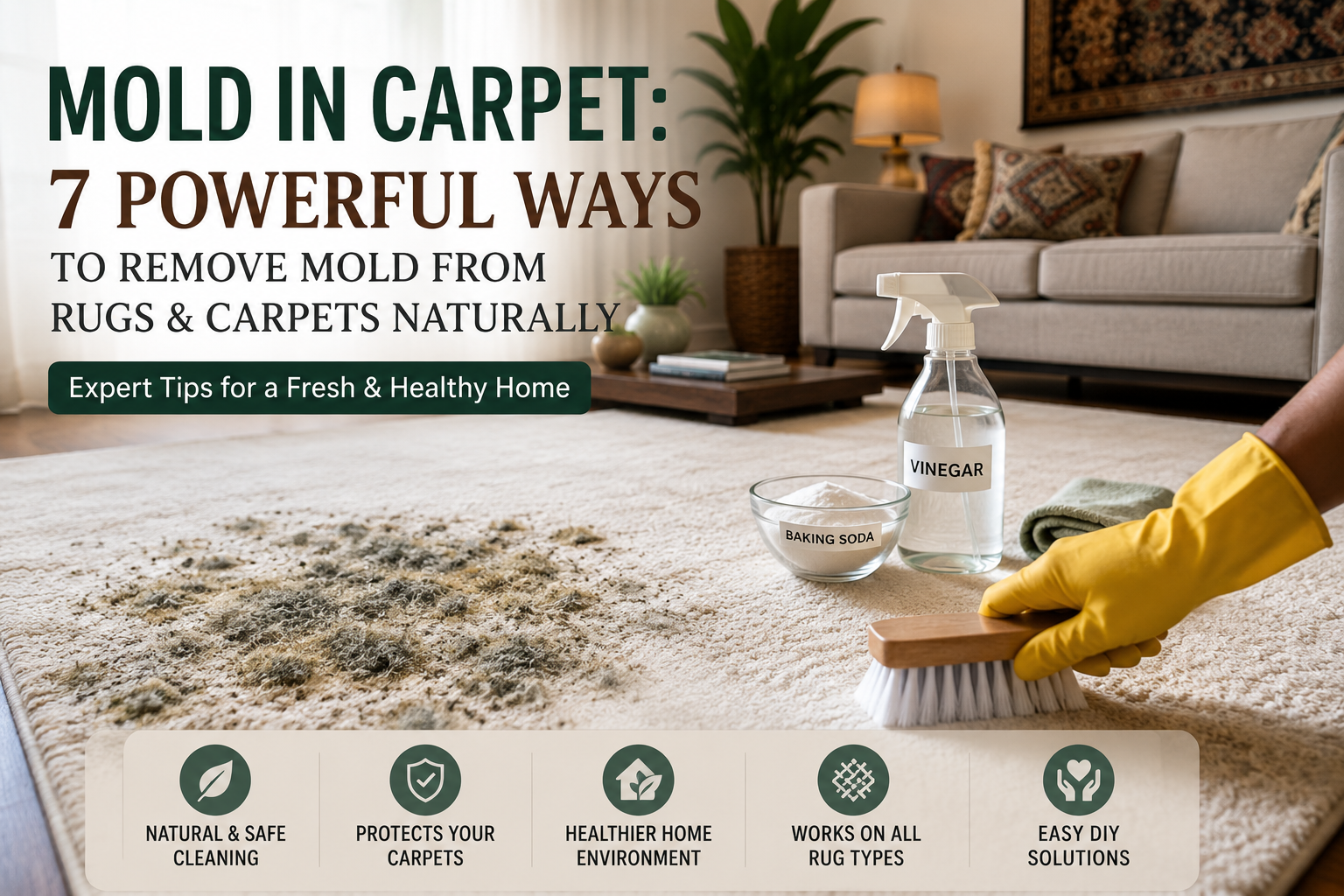
How to Get Mold Out of Carpet Naturally
If the mold patch is small and recently formed, you can often remove it yourself using simple cleaning methods.

Step 1: Improve Ventilation
Open all windows and doors immediately. Proper airflow helps reduce moisture and prevents spores from spreading further.
Use fans or a dehumidifier for faster drying.
Step 2: Vacuum the Carpet
Use a HEPA vacuum cleaner to remove loose spores and dirt from the carpet surface.
Avoid regular vacuums because they may spread spores into the air.
Step 3: Apply Baking Soda
Sprinkle baking soda generously over the affected area and allow it to sit overnight.
Baking soda absorbs moisture and neutralizes unpleasant odors.
Step 4: Use White Vinegar Solution
Mix equal parts white vinegar and warm water in a spray bottle.
Spray the moldy area lightly without soaking the carpet completely.
White vinegar naturally kills many types of mold and bacteria.
Step 5: Scrub Gently
Use a soft brush or cloth to scrub the carpet fibers carefully.
Avoid aggressive scrubbing on delicate handmade rugs.
For premium handcrafted rugs, explore durable wool options at Wool Carpets Collection.
Step 6: Dry Thoroughly
Drying is the most important step in carpet mold removal.
Use:
- Ceiling fans
- Portable fans
- Dehumidifiers
- Sunlight exposure where possible
Never leave moisture trapped beneath the carpet.
How to Remove Mold from Handmade Rugs
Handmade rugs require extra care because harsh chemicals can damage natural fibers and colors.

At Custom Rugs by Indian Carpets, many luxury rugs are crafted using wool, bamboo silk, Kashmiri silk, and natural dyes. These materials should always be treated gently.
Best Practices for Handmade Rugs
- Avoid bleach-based cleaners
- Use mild natural cleaning solutions
- Dry rugs flat in sunlight
- Never over-saturate fibers
- Test cleaning products on a hidden corner first
What Happens If Mold Is Under the Carpet?
Visible mold is sometimes only a small part of the actual problem.
If mold spreads beneath the carpet padding, it may affect:
- Subflooring
- Wooden flooring
- Concrete surfaces
- Wall edges
- Furniture nearby
Warning Signs of Hidden Mold
- Mold returns after cleaning
- Carpet smells worse after vacuuming
- Floor feels soft underneath
- Black stains spread quickly
In such cases, professional mold removal becomes necessary.
Can Moldy Carpets Be Saved?
Yes — in many situations, carpets can be restored successfully if action is taken early.
Factors that determine recoverability include:
- Duration of moisture exposure
- Type of carpet material
- Size of mold growth
- Damage to carpet padding
- Odor intensity
High-quality wool carpets often survive better because wool naturally resists some bacterial growth.
Explore durable handcrafted styles:
Best Carpet Materials for Moisture-Prone Areas
Choosing the right carpet material helps reduce future mold risks.
Wool Carpets
Wool naturally regulates moisture and offers durability.
Cotton Rugs
Lightweight and easier to wash regularly.
Polyester Carpets
Dry quickly and resist moisture absorption.
Flat Weave Carpets
Better airflow prevents trapped dampness.
Browse premium handcrafted collections:
Room-by-Room Carpet Care Tips
Different rooms face different moisture challenges.
Living Room Carpets
Use regular vacuuming and proper ventilation.
Browse: Living Room Rugs
Bedroom Rugs
Avoid placing damp laundry near rugs.
Browse: Bedroom Carpets
Dining Room Rugs
Clean food spills immediately to avoid moisture buildup.
Browse: Dining Room Rugs
How Indian Craftsmanship Creates Long-Lasting Carpets
India has one of the richest weaving traditions in the world. Handmade carpets crafted by skilled artisans combine beauty, durability, and cultural artistry.
At Indian Carpets Blog, you can explore the heritage behind traditional weaving techniques, luxury rug styles, and modern carpet trends.
Popular styles include:
- Modern carpets
- Traditional carpets
- Transitional rugs
- Geometric patterns
- Floral carpets
- Minimalist rugs
These handcrafted carpets are designed for both elegance and longevity.
Custom Carpet Solutions for Modern Homes
Every home has unique dimensions and interior styles. Custom carpets allow homeowners to choose:
- Bespoke sizes
- Custom shapes
- Personalized colors
- Material preferences
- Handcrafted finishes
Explore luxury customization services at Indian Carpets Custom Rugs.
Preventing Mold in Carpet Permanently
Prevention is always easier than restoration.

Keep Humidity Below 60%
Use a dehumidifier during monsoon seasons.
Clean Spills Immediately
Never allow water to remain trapped inside fibers.
Improve Airflow
Open windows regularly and use fans.
Schedule Professional Cleaning
Deep clean carpets every 6–12 months.
Avoid Excess Moisture
Do not place wet shoes or damp furniture directly on rugs.
Decorative Rug Styles That Balance Beauty and Function
Modern homes require carpets that are both stylish and practical.
Trending collections include:
Popular décor styles:
- Artistic
- Contemporary
- Minimalist
- Classic Luxury
- Maximalist
Why indiancarpets.in/ Stands Out
indiancarpets.in/ combines traditional Indian craftsmanship with modern luxury living.
The brand focuses on:
- Handcrafted quality
- Ethical weaving practices
- Luxury materials
- Customization options
- Modern interior trends
- Worldwide design appeal
Every rug reflects artistry, heritage, and precision craftsmanship.
FAQs
What kills mold on carpet naturally?
White vinegar, baking soda, and hydrogen peroxide are commonly used natural mold removal solutions.
Can mold in carpet affect health?
Yes. Mold spores can trigger allergies, breathing issues, asthma, and skin irritation.
Is it safe to sleep in a room with moldy carpet?
No. Continuous exposure to mold spores can negatively affect respiratory health and sleep quality.
How fast does mold grow in carpet?
Mold can begin growing within 24–48 hours after moisture exposure.
Can handmade rugs develop mold?
Yes. Wool, silk, and cotton rugs can develop mold if exposed to prolonged moisture.
Should moldy carpet padding be replaced?
If padding remains damp or smells musty, replacement is often the safest solution.
Final Thoughts
Mold in carpet is not just a cleaning issue — it is a home health concern that requires immediate attention. With proper cleaning, airflow, and preventive care, most carpets and rugs can remain beautiful, fresh, and long-lasting for years.
Luxury carpets deserve thoughtful maintenance, especially when handcrafted using traditional Indian weaving techniques. At Indian Carpets, every rug is designed to combine timeless craftsmanship with modern living.
Whether you are searching for elegant wool carpets, contemporary rugs, or bespoke handmade masterpieces, Indian Carpets offers collections that bring warmth, sophistication, and durability into every space.
For personalized assistance or custom rug solutions, visit Contact Indian Carpets.
Source reference: