Choosing the Perfect Area Rug for Your Space
Ever look around your living room and feel like your sofa and coffee table are just awkwardly hovering in the middle of the space? Interior designers refer to this common dilemma as “furniture floating,” a phenomenon where pieces feel completely disconnected from one another. Without a defined boundary, even the most beautifully curated furniture can leave a room feeling disjointed and incomplete.
The secret to fixing this isn’t buying more decor, but rather introducing a concept known as visual anchoring. By laying down a deliberate foundation, you instantly connect isolated seating into a cohesive, inviting arrangement. You can also explore our complete guide on living room rug placement ideas: /living-room-rug-guide/ for more styling inspiration. Design experts at Architectural Digest also highlight how rugs help define open living spaces naturally.
Beyond fixing visual chaos, your floors dictate the physical comfort of your home. There is a very specific, unpleasant shock when your bare feet hit a freezing hard floor at 7:00 AM on a Tuesday. According to home acoustics studies, integrating thick textiles into your rooms does more than just solve that morning chill. It also provides crucial acoustic dampening, which is simply the absorption of everyday echoes from barking dogs, clattering dishes, and heavy footsteps. A bare room amplifies noise, while a well-placed textile literally quiets your space.
This dual ability to visually organize and physically soften a room is exactly why design experts view floor coverings as architectural tools rather than mere accessories. Think of large area rugs as the subtle walls of an open-concept home. They draw invisible lines that tell your brain where the living room ends and the dining space begins, all without requiring a single piece of drywall. Treating a rug as your room’s structural foundation changes how you shop, shifting the focus from just picking a pretty pattern to finding a highly functional boundary.
Getting that architectural magic right usually comes down to scale, which is the most common stumbling block for shoppers. For example, trying to squeeze a tiny, postage-stamp mat under a sprawling sectional often makes the entire room look cheaper and smaller.
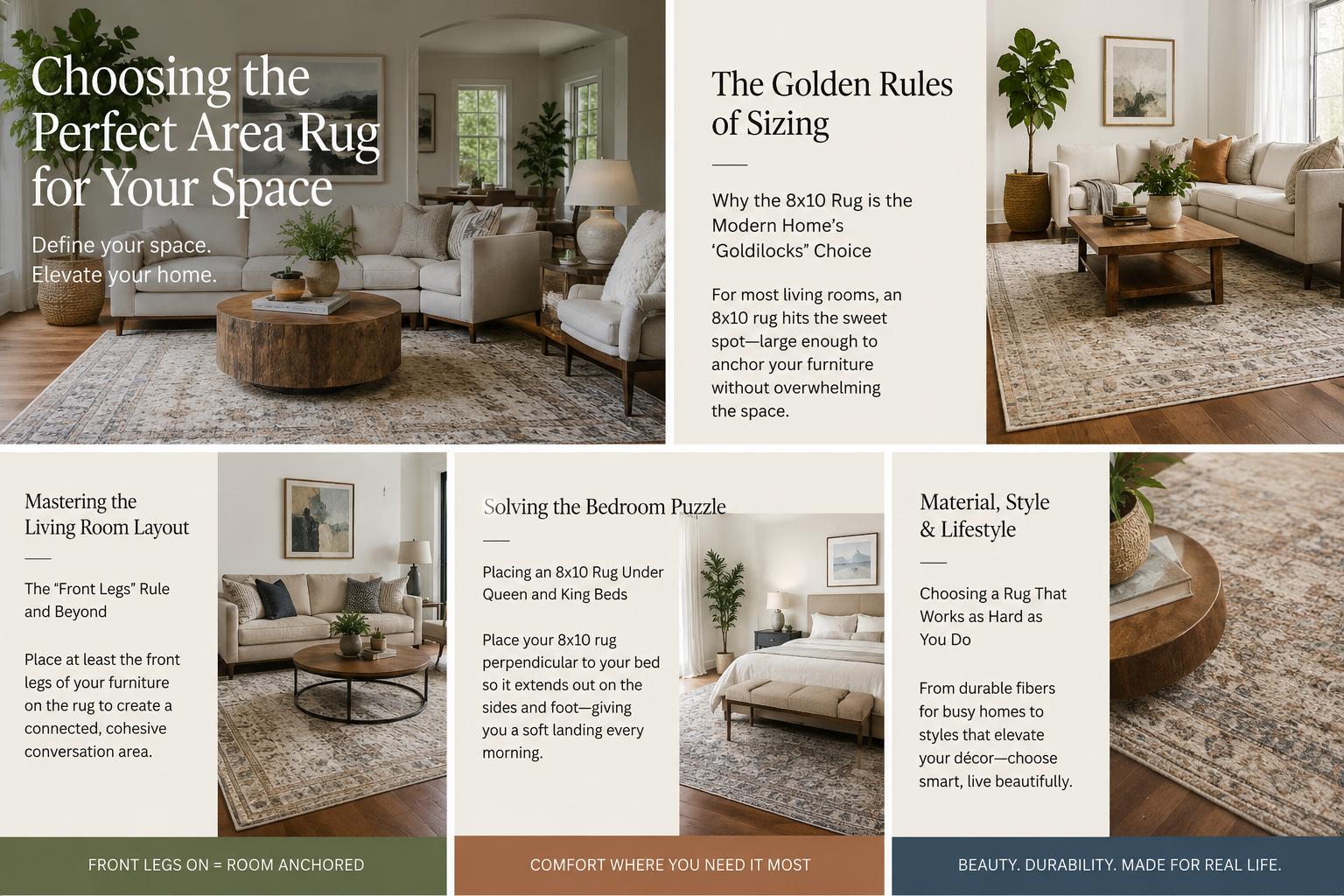
In practice, choosing an 8×10 area rug is a reliable starting point for most average-sized living rooms. It allows you to follow the beloved “front-legs rule,” where the front legs of your major furniture rest comfortably on the fabric, tying the whole conversation area together seamlessly. Browse our collection of 8×10 area rugs: /8×10-area-rugs/ to find the right fit for your space. You can also find additional room layout inspiration on Houzz.
Finding the perfect dimensions, matching fiber materials to your daily lifestyle, and choosing styles that elevate existing furniture transforms a space. Whether dealing with pet messes, spilled wine, or a chilly bedroom, the ideal foundation is well within reach.
The Golden Rules of Sizing: Why the 8×10 Rug is the Modern Home’s ‘Goldilocks’ Choice
Have you ever walked into a living room where a tiny rug sits sadly under a coffee table, miles away from the sofa? Designers call this the “postage stamp” error, and it is the fastest way to make a spacious room feel disjointed. Instead of tying your furniture together, a rug that is too small creates a shrinking room effect that throws off your entire layout. For most standard living spaces, 8×10 rugs hit the sweet spot of being large enough to anchor your main furniture without swallowing the room whole.
Visual balance relies on leaving a comfortable frame of bare floor around the edges, which is where the 18-inch rule saves the day. When shoppers ask, “how big is 8×10 rug compared to my actual room?” they often forget this essential negative space. Grab those basic room measurements you took earlier and use this straightforward clearance guide to find your ideal proportions:
- Take your total room length and width in inches.
- Subtract 36 inches from both dimensions (leaving an 18-inch bare floor border on all four sides).
- Match this remaining floor space to standard sizes to see if an 8×10 fits your layout, reducing the border to 8 inches if you are in a tight apartment.
Leaving this breathing room ensures your 8×10 floor rugs look like intentional design choices rather than accidental wall-to-wall carpeting. Knowing your bare floor border sets the stage for perfect furniture placement.
Mastering the Living Room Layout: The ‘Front Legs’ Rule and Beyond
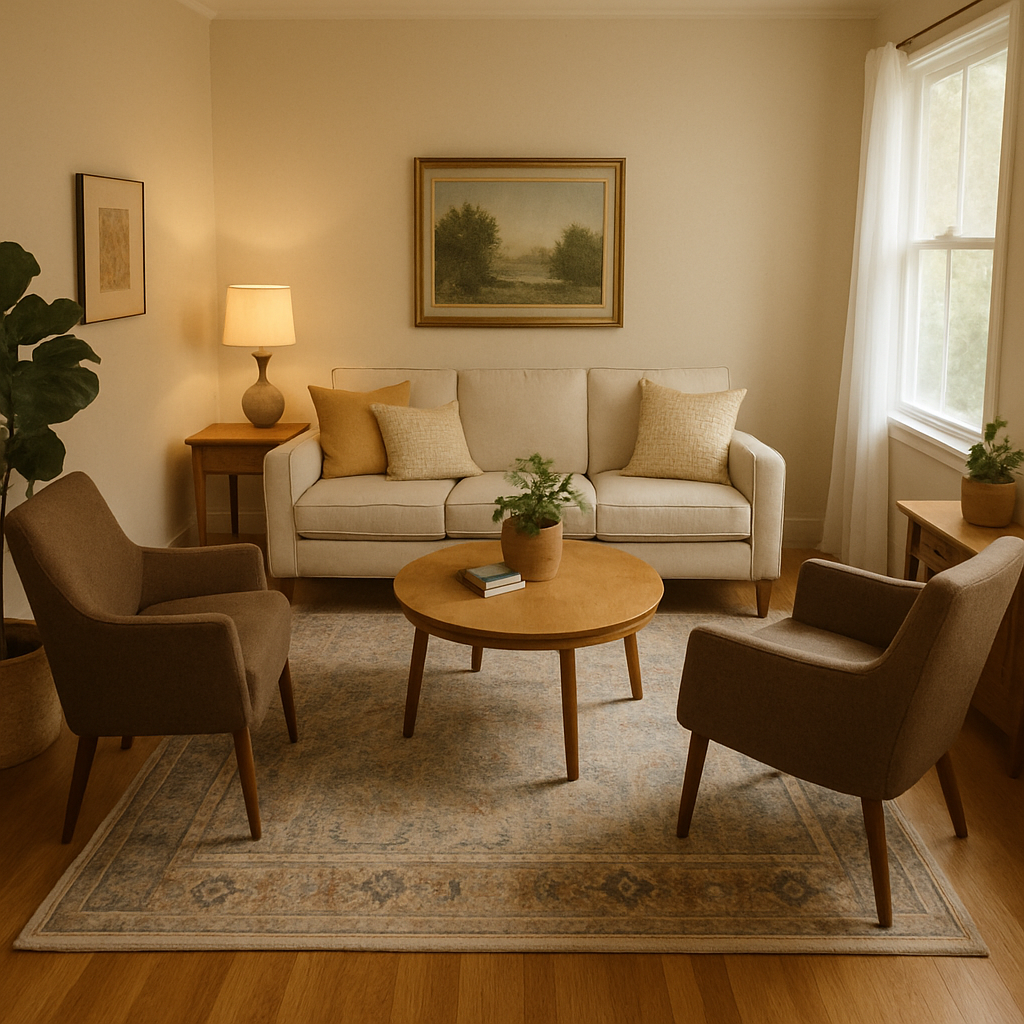
A well-designed room relies heavily on how your furniture actually interacts with your floor. Think of an 8×10 rug for living room spaces as a visual boundary that groups your sofa and chairs into a cozy conversation zone. If your seating is simply pushed near the edge of the rug but not touching it, the pieces look entirely disconnected from one another.
To lock that conversation zone together, designers use a simple alignment trick. When styling 8×10 living room rugs, you generally have three layout choices:
- All legs on: Perfect for open-concept spaces where the rug acts as a giant island holding the entire furniture set.
- Front legs only: The universal standard for most homes. Placing just the front two legs of your seating on the rug securely anchors the room and connects the furniture.
- No legs on: Generally avoided, as it creates a dreaded “floating” effect where pieces look like they are drifting apart.
Relying on the front-legs-only approach with 8×10 rugs ensures your space feels expertly styled without requiring a massive, expensive textile. The same anchoring logic applies seamlessly to bedroom layouts.
Solving the Bedroom Puzzle: Placing an 8×10 Rug Under Queen and King Beds
Stepping onto a freezing floor first thing in the morning is jarring, which is why bedroom rugs 8×10 in size are incredibly popular design choices. Instead of viewing this textile as just a decorative layer, treat it as your morning landing zone. The primary goal is to maximize under-foot comfort right where you step out of bed, ensuring your day starts with soft warmth.
To create this cozy perimeter, designers rely on perpendicular placement. When styling an 8×10 rug for queen bed setups, lay the longest side of the rug horizontally across the room, slipping it about two-thirds of the way under the mattress. By pulling the rug so it stops just short of your nightstands, you leave roughly 18 to 24 inches of material peeking out symmetrically on the sides and the footboard.
Maintaining this balanced border gets slightly trickier if you upgrade your mattress. While an 8×10 works beautifully for a Queen, King-sized frames swallow too much of the width, making a larger 9×12 rug a much better choice to preserve that comfortable morning runway. Once your sleeping space is perfectly anchored, similar spatial math dictates eating areas.
Dining Room Dynamics: Why Your Chairs Need 24 Inches of Breathing Room
Nothing disrupts a lovely dinner faster than pushing your seat back and feeling the rear legs drop off the rug. To prevent this annoying tipping sensation, the golden rule involves adding 24 inches to all sides of your base table dimensions. When measuring clearance for dining room chairs, this vital breathing room ensures guests can slide back comfortably without snagging the border. For visual harmony, simply match your shapes, placing rectangular tables over rectangular bases to create perfect symmetry.
Applying this spatial math usually means you need to look at large area rugs to properly anchor the room. For a standard six-person dining table, 8×10 area rugs perfectly accommodate both the furniture and the necessary pull-out margin. Skimping on these dimensions creates a “shrinking room” effect, making the entire dining space feel surprisingly cramped and awkward to navigate.
Beyond sizing, you must also consider the pile—which is simply the thickness of the fibers. Dining spaces require low-pile or flat-weave options rather than thick, fluffy shags. A flat surface guarantees chair legs will glide effortlessly rather than getting trapped in deep threads. With size and texture locked in, selecting a material that survives accidental spills becomes the priority.
Wool vs. Synthetic: The ‘Winter Coat vs. Activewear’ Performance Test
Investing in an 8×10 wool rug is exactly like buying a premium winter coat. Wool naturally contains a waxy lanolin barrier, which stops accidental spills from instantly soaking into the threads. Explore premium wool area rugs: /wool-rugs/ for long-lasting comfort and durability. Material comparison guides from The Spruce can also help homeowners choose between wool and synthetic fibers.
This natural marvel also boasts incredible fiber memory, meaning the yarns bounce back under heavy chairs rather than permanently flattening. While a wool rug 8×10 requires a larger upfront budget, it easily offers a 20-year lifespan of plush comfort.
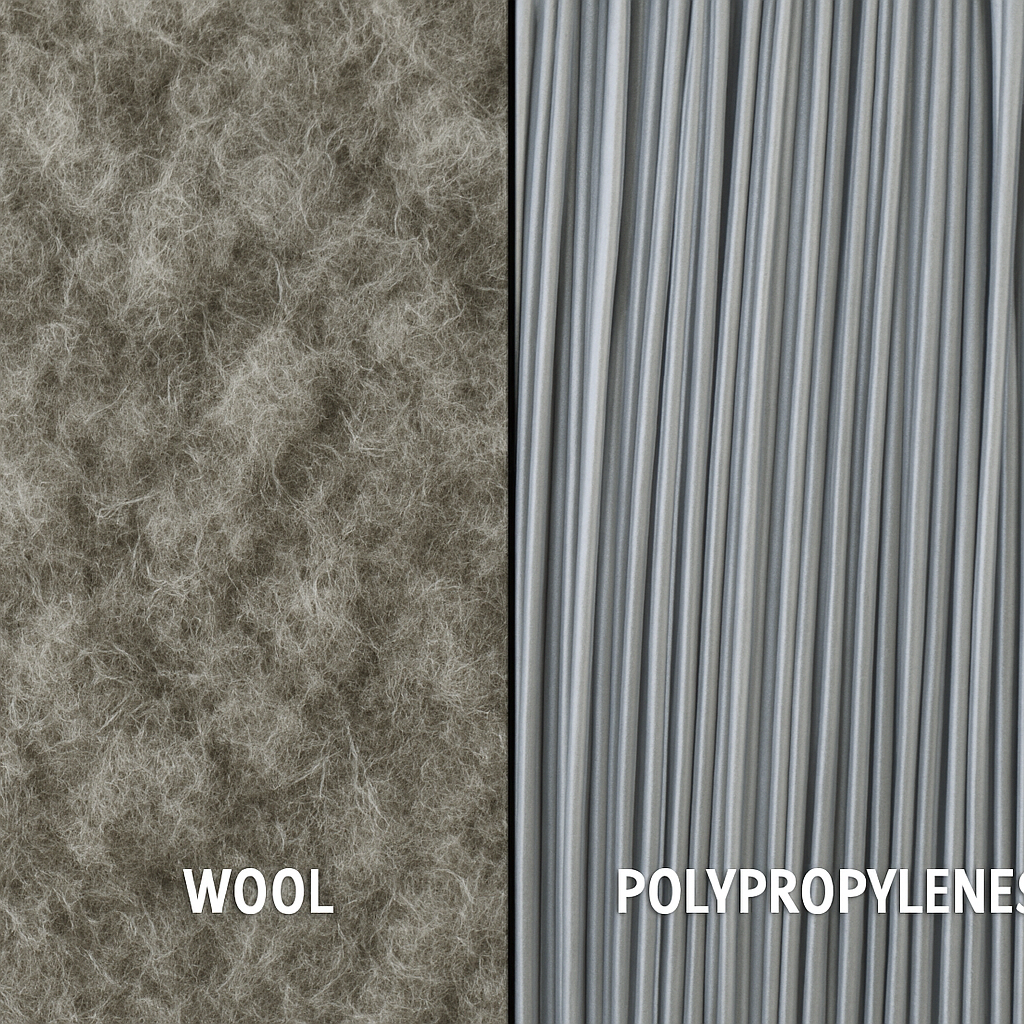
| Category | Natural Wool | Polypropylene | | :— | :— | :— | | Cost | Long-term investment | Budget-friendly | | Stain Resistance | Repels liquids (Lanolin) | Supreme easy-clean | | Longevity | 20+ years | 3-5 years | | Feel | Matte and dense | Shiny and smooth |
Alternatively, synthetic materials act as your home’s performance activewear. If your dining room hosts daily toddler messes, a wool vs polypropylene performance comparison heavily favors the latter. Manufacturers utilize heat-setting synthetics—a process that bakes a twist into the plastic yarns—making them surprisingly soft and highly fray-resistant. While they completely lack natural fiber memory, these cleanable champions let you scrub away disasters without ruining the dye.
Ultimately, your choice balances a durable heirloom against a stress-free placeholder. For heavy durability with an earthy vibe, natural plant-based materials offer another compelling route.
The Jute and Sisal Strategy: Adding Texture Without Breaking the Bank
Bringing the outdoors inside has a specific, relaxing charm. When choosing durable natural fiber floor coverings, materials like jute and sisal act as the ultimate woven foundation. These plant-based options introduce a rich, organic texture that gives any room a warm, eco-friendly vibe. Because they are spun directly from dried stalks, an 8×10 jute rug is incredibly affordable, making it perfect for budget-conscious decorators looking to make a massive impact.
However, this earthy aesthetic comes with a minor quirk: natural fiber shedding. Just like a new wool sweater leaves fuzz on your shirt, a fresh jute rug 8×10 will initially drop tiny, dusty plant particles onto your floor. You can easily manage this temporary phase by vacuuming without the rotating brush roll turned on. Relying strictly on the suction-only setting pulls up loose fibers without tearing the delicate woven threads.
Once settled, these neutral staples become the ideal blank canvas. Designers love using an oversized natural base to anchor a space, layering a smaller, colorful patterned rug directly on top for a high-end, curated look. If surviving daily spills and dirty footprints is the top priority, however, washable options provide a modern miracle.
The Washable Rug Revolution: Can You Really Fit an 8×10 in a Home Washer?
Accidental spills used to spell disaster for a living room floor, but modern textile science has changed the game. Instead of simply coating fibers to be water-resistant—meaning messes just sit on top temporarily—brands now engineer true washable 8×10 rugs. These rely on a brilliant two-part system: a lightweight, decorative top layer and a separate, grippy rug pad. The top cover features a specialized machine-washable backing that bends easily, functioning more like a heavy blanket than a traditional stiff carpet. This makes them the ultimate survival tool for active families.
Before bringing home a massive 8×10 washable rug, you must verify your laundry appliances can actually handle the bulk. Use this quick cubic-foot capacity checklist to match your machine to the right cover:
- Standard Washers (3.0–3.8 cu ft): Best for 5×7 covers or long runners.
- Large Washers (3.8–4.5 cu ft): Required for most 8×10 covers.
- Extra-Large/Commercial (4.5+ cu ft): Ideal for 9×12 sizes or particularly thick covers.
If your drum clears that 3.8 threshold, exploring washable rugs 8×10 in size guarantees long-term stress relief. While these flexible systems offer unmatched practicality, they naturally lack a thick, plush feel. True luxury requires an understanding of traditional construction methods.
Construction Secrets: Hand-Knotted vs. Hand-Tufted Investments
Staring at identical-looking rugs with vastly different price tags is baffling. The secret lies entirely in the difference between hand-tufted and hand-knotted construction. An authentic hand-knotted piece, like a classic 8×10 persian rug, is built entirely without adhesives. Artisans tie individual yarns to intersecting foundational threads called the warp and weft—the literal woven skeleton holding the design together. Because every knot is secured manually, these rugs easily withstand decades of heavy foot traffic to become true family heirlooms.
Conversely, tufted pieces offer luxurious aesthetics on a tighter budget by skipping those time-consuming knots. Manufacturers punch yarn through a fabric sheet, locking everything in place with latex glue behind a stiff canvas backing. While a tufted 8×10 oriental rug imitation looks stunning initially, the adhesive eventually dries out and cracks. This inevitable latex glue breakdown creates a fine white powder that sheds under your rug, meaning these pieces function as disposable decor lasting only five to ten years before losing their plushness.
Fortunately, spotting the difference just requires flipping the rug’s corner. If the back clearly mirrors the front pattern, you are viewing secure, individual knots. If a thick canvas backing hides the design entirely, you are holding a glued tufted piece. Mastering this visual trick guarantees you pay the right price for your interior spaces, and this same foundational logic applies perfectly to outdoor environments.
Outdoor Rugs: Creating a Living Room Under the Stars
Moving to the patio shouldn’t mean sacrificing the anchored feeling of your indoor living spaces. You can easily recreate a true “room” effect under the open sky by grounding your seating area with outdoor rugs 8×10 in size. Explore our durable outdoor rug collection: /outdoor-rugs/ for patios and balconies. For outdoor decorating tips, Better Homes & Gardens shares practical patio styling ideas.
. Placing just the front legs of your chairs and sofa on the border of the rug instantly ties the arrangement together, preventing your furniture from looking like it is floating aimlessly across the deck.
To survive the elements, these patio foundations require completely different materials than your indoor plush. Quality 8×10 outdoor rugs rely on UV-stabilized fibers, which act like heavy-duty sunscreen baked directly into the yarn. This specialized manufacturing process locks the dye into the synthetic material, preventing vibrant patterns from sun-fading into a washed-out blur after a harsh summer.
Beyond sun protection, these pieces feature a smart drainage weave—a porous construction letting rainwater pass straight through rather than creating a soggy sponge. Thanks to this breathable design, cleaning a muddy outdoor rug takes only a garden hose and mild soap. These durable alfresco choices prove that proper materials dictate long-term success.
Neutral Territory: How Beige and Grey Rugs Transform Visual Space
A cramped, dim living room can feel claustrophobic, but a strategic color choice changes the space’s entire geometry. Choosing neutral area rugs 8×10 triggers a clever trick known as visual expansion. Just like crisp white walls make ceilings feel higher, dropping a broad expanse of pale grey on the floor reflects ambient light upward, instantly making tight spaces feel beautifully airy and open.
Maximizing this expansive feeling relies on a design concept called contrast grounding. If you have dark espresso hardwood or slate tile, rolling a crisp beige rug 8×10 over it creates a striking “High-Contrast” effect. Instead of your furniture blending into a muddy shadow against dark floors, the bright rug acts like a spotlight, deliberately framing your seating arrangement and giving the room a designer-finished foundation.
The primary hesitation with pale floors is the fear of everyday dirt and pet hair ruining the aesthetic. To get this airy look without constant cleaning stress, find a neutral rug featuring a “heathered” design. Heathering simply means different shades of yarn are subtly woven together, creating a mottled appearance that flawlessly camouflages daily dust.
Bold Patterns and Oriental Aesthetics: Grounding Your Decor
Stepping away from quiet neutrals into bold prints can feel intimidating, but success relies on a simple concept: pattern scale. The golden rule is to match print size to your room dimensions, allowing expansive spaces to gracefully handle oversized designs. To avoid “visual noise”—that chaotic feeling when too many elements clash—pair heavily patterned modern area rugs 8×10 with solid-colored sofas. This transforms the floor into the room’s central art piece without overwhelming the eye.
Outlasting fleeting decor trends, traditional motifs offer a surprisingly forgiving and elegant solution. Rolling out an 8×10 persian rug introduces rich, grounding prints that brilliantly anchor floating furniture. Beyond their timeless beauty, these intricate designs serve as practical workhorses for busy households. The densely woven colors seamlessly camouflage scuff marks and inevitable spills in your most high-traffic areas.
Whether you choose classic motifs or a bold, contemporary checkered design, the secret is balancing vibrant floors with quiet furnishings. Naturally, any patterned layer requires proper protection from the ground up.
Why Your Rug Needs a Pad: It’s Not Just an ‘Add-On’
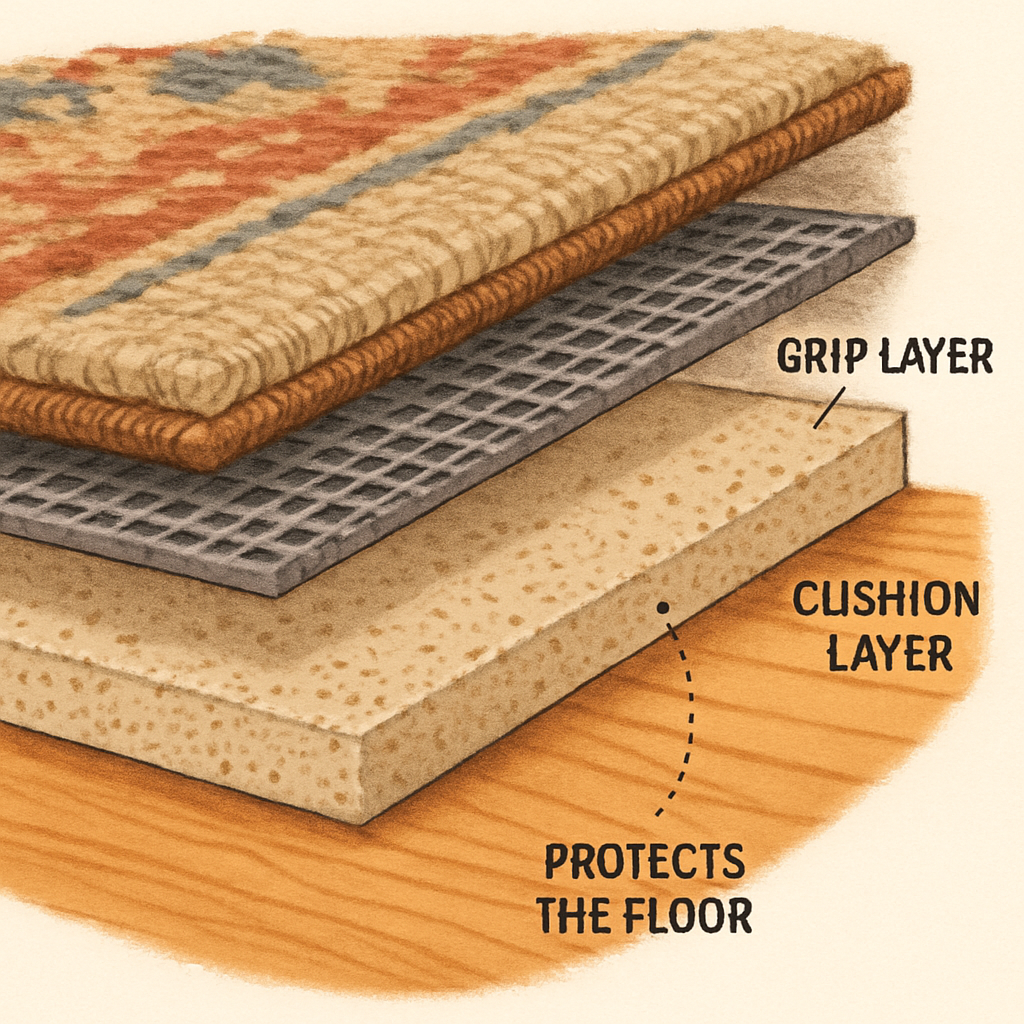
Spending an afternoon arranging furniture only to realize your new rug slides dangerously across the floor is a frustrating rite of passage. Skipping the pad doesn’t just cause slips; it actively ruins your hardwood. Every footstep grinds the rug’s coarse backing into your floorboards, causing permanent scratches known as “backside friction.” Slipping a quality rug pad 8×10 underneath stops this damage and acts as a shock absorber for footstep impact, effectively extending your rug’s life by 50%.
Evaluating the benefits of felt versus rubber rug pads ensures you get exactly what your space needs:
- Rubber: Provides maximum grip for high-traffic zones. Choose natural rubber to avoid “off-gassing”—that lingering chemical smell released by cheap PVC plastics.
- Felt: Adds a luxurious, thick cushion under heavy furniture that already anchors the rug.
- Felt-Rubber Hybrids: The ultimate multitasker, offering dense felt on top for comfort and a rubber bottom for unwavering safety.
Trimming an 8×10 rug pad one inch shorter than your rug keeps the edges lying perfectly flat. With a secure foundation, styling techniques like layering for texture and depth become the next logical step.
Layering Rugs for Texture and Depth: The Designer’s Secret Weapon
Walking into a room that feels slightly cold is a common design hurdle, but layering rugs for texture and depth offers an immediate fix. Designers use a trick called texture stacking—mixing different material types—to instantly warm up minimalist spaces. Think of it like wearing a smooth leather jacket over a chunky knit sweater; the visual contrast makes both pieces look substantially better.
Mastering this look relies on the simple “Base-plus-Accent” method. Start by anchoring your room with neutral, flat-woven large area rugs, such as a sturdy 8×10 jute rug. Next, place a smaller, vibrant piece—like a colorful vintage rug or a faux-cowhide—directly on top. Centering this top layer under a coffee table creates a custom, high-end focal point that looks incredibly intentional.
Beyond pure aesthetics, tossing an accent layer down acts as a brilliant cover-up for an older base rug suffering from stubborn stains or worn patches. Building these stylish combinations opens the door to sourcing affordable foundation pieces at major retailers.
Shopping the Big Box Stores: Finding Deals at Home Depot, Lowe’s, and Target
Typing “8×10 rug near me” into a search bar often leads to a frustrating reality: physical stores simply lack the floor space to display massive carpets. This creates an “inventory gap” where retailers keep their best selections tucked away in digital warehouses. To beat this system without paying hefty freight charges, utilize “Ship to Store” options. You can easily browse thousands of online home depot area rugs 8×10 or lowes rugs 8×10, have them delivered to the local customer service desk for free, and return them immediately if the colors clash with your sofa.
Understanding retail calendars is just as crucial for stretching your budget. Stores follow strict seasonal retail cycles to clear out large, bulky inventory, meaning you can easily score stylish 8×10 area rugs target shoppers rave about for well under $200 during these specific windows:
- Spring (May): Memorial Day sales efficiently clear out heavy winter textures.
- Late Summer (August): Labor Day brings massive discounts on durable, family-friendly flatweaves.
- Late Fall (November): Black Friday offers the steepest price drops on premium, thick piles.
While leveraging these big-box clearance cycles guarantees a fantastic deal, taking your search entirely online requires a different strategy to avoid accidentally buying paper-thin materials.
Finding Quality on a Budget: Amazon, Walmart, and the $100 Challenge
Hunting down an 8×10 rug under $100 might feel like searching for a unicorn, but scoring serious value online is entirely possible if you work the search filters. When browsing massive digital marketplaces, bypass generic cheap rugs 8×10 searches and explicitly filter for synthetic materials, which offer the best durability-to-price ratio for busy households. You will often uncover hidden gems by checking clearance sections, where last season’s overstock is consistently priced to move.
The real secret to avoiding a flimsy purchase lies in the customer review section, not the retailer’s studio photography. Those bright, perfectly lit professional photos often misrepresent color accuracy, making a muted navy look vibrant or a warm cream appear stark white. To see how these discount 8×10 rugs actually look under standard living room light bulbs, scroll straight to the user-uploaded photos to verify the real-world color before adding anything to your cart.
Reading between the lines of those written reviews is your final defense against poorly constructed materials. Pay close attention to recurring complaints about intense chemical odors or stiff edges that refuse to lay flat, as these indicate low-quality manufacturing. If you end up with a budget-friendly find that misbehaves right out of the packaging, a few simple tricks can fix the issue.
Troubleshooting Common Rug Woes: Curling Corners and Shedding
Unrolling a new purchase only to find a tripping hazard is frustrating, but learning how to stop rug corners from curling takes minimal effort. Because tightly packaged rugs develop shape “memory” during shipping, the easiest fix is the “reverse roll” technique. Curl the stubborn edges backward overnight to break the physical tension. If the corners still lift the next morning, applying gentle heat from a clothing steamer relaxes the stiff binding immediately.
Those heavy sofa dents left behind after rearranging your living room look permanent, yet removing furniture indentations from pile requires only your freezer. Place a standard ice cube directly into the crushed divot and let it melt completely over 24 hours. As the water slowly absorbs, the compressed material naturally swells. A quick fluff with a spoon afterward erases the mark completely.
A vacuum canister full of fuzz might spark panic after buying a premium wool rug 8×10, but natural shedding is just a harmless “breaking in” phase. Conversely, synthetic rugs actively losing plastic threads indicates cheap manufacturing and permanent fiber breakdown. Resolving these minor structural headaches ensures your home is ready for active, daily living.
The Pet-Friendly and Allergy Guide: Choosing ‘Life-Proof’ Floor Coverings
Sharing a home with pets or allergies doesn’t mean settling for bare, echoing floors. When searching for the best hypoallergenic flooring for bedrooms, always start with low-pile designs. Shorter, tightly woven threads leave zero room for dust mites to hide and naturally prevent sharp claws from snagging the loops.
When messy accidents inevitably happen, “solution-dyed” synthetics are lifesavers. Rather than painting color onto the outside of a finished thread, solution-dyeing mixes the pigment directly into the liquid plastic before it is spun. The color goes all the way through—like a carrot instead of a red apple. The top pet-friendly rug materials for busy homes include:
- Polypropylene: Completely colorfast, allowing you to clean tough messes with diluted bleach without ruining the pattern.
- Nylon: Incredibly resilient, easily bouncing back from heavy foot traffic and running paws.
- Low-pile Wool: Contains natural oils that bead up and repel liquid spills before they soak in.
Protecting your indoor air quality is just as crucial as durability. Finding an “Oeko-Tex” certified label guarantees your floor covering was manufactured completely free from harmful chemicals.
Your Final 8×10 Checklist: From Measurement to Maintenance
You now have the tools to anchor your space with total confidence. You understand exactly how fibers interact with your daily life—whether your home is filled with playful toddlers, energetic pets, or heavy foot traffic.
Before finalizing your purchase, run through this practical 5-point checklist:
- Size: Ensure the 18-inch border rule fits your room’s layout.
- Material: Match the fiber strictly to your daily durability needs.
- Pad: Commit to a quality rug pad to protect your floors and extend the rug’s life. Browse our rug pad collection: /rug-pads/ to improve comfort and floor protection. Cleaning and maintenance advice from Good Housekeeping can also help keep your rugs looking new for years.
- Door Clearance: Verify nearby doors can swing freely over the rug’s thickness.
- Cleaning Plan: Know exactly how you will tackle inevitable spills based on the material.
Verify that your home washing machine actually has the drum capacity for “washable” selections, and finalize your budget between a high-traffic synthetic or an investment-quality heirloom.
Choosing the perfect area rug is an active step toward making your home feel incredibly welcoming. Try applying the “front legs” placement rule to your living room furniture today and notice how the space immediately feels pulled together. By grounding your furniture properly, you transform any bare floor into a cohesive, beautifully designed sanctuary.