
A kaleen for floor is a handmade or machine-made rug used to cover flooring, add warmth, and finish a room. If you’ve searched “kaleen for floor,” you’re probably trying to figure out which type actually fits your space, your budget, and your daily life. This guide covers the real differences between hand knotted, hand tufted, jute, and shaggy carpets, how to size and place them, and how to keep one looking good for years.
We make rugs for a living. Everything below comes from what we see on the production floor: which materials hold up, which ones shed, and which ones customers regret buying.
Table of Contents
What is a kaleen for floor?
A kaleen for floor is any rug or carpet placed over flooring to add comfort, sound absorption, and visual definition to a room. In India, “kaleen” refers broadly to handmade and machine-made floor coverings, ranging from hand knotted wool rugs to tufted and flatweave designs. The right one depends on the room, the traffic it gets, and how much upkeep you’re willing to do.
Why a good kaleen for floor actually matters
A rug isn’t just decoration. It changes how a room feels underfoot and how it sounds.
It absorbs sound. Hard floors bounce noise around a room. A dense wool rug cuts that down noticeably, especially in apartments with tile or wood flooring.
It traps dust instead of spreading it. This is where indoor air quality comes in. A rug’s fibers hold dust and pollen until you vacuum, rather than letting them circulate in the air. Wool is particularly good at this because the fiber structure traps particles low in the pile. You do need to vacuum regularly for this to work in your favor, though. A rug that’s never cleaned just becomes a dust reservoir.
It protects the floor underneath. Wood and stone floors scratch and dent under foot traffic and furniture legs. A rug with a proper backing spreads that pressure out instead of concentrating it on a few points.
It defines a space. In open-plan homes, a rug marks where the living area ends and the dining area begins, without needing a wall.
Types of kaleen for floor, explained
Not all rugs are built the same way, and the construction method changes everything: durability, price, feel, and how long it’ll last in a high-traffic room.
Hand knotted carpets
A hand knotted rug is built one knot at a time on a loom, usually with wool or a wool-silk blend. Each knot is tied by hand around the warp threads, which is why a single 9×12 rug can take weeks to finish depending on the knot density.
This is the most durable construction we make. The knots lock the pile in place, so there’s no backing to fail and very little shedding once the rug has broken in. Knot count matters here: a higher knot count means finer detail and a tighter weave, but it also means a longer production time and a higher price.
Hand knotted rugs are worth it if you want something that lasts decades and can be re-piled or repaired instead of replaced. They’re not the right pick if you need something fast or need to furnish a large space on a tight budget.
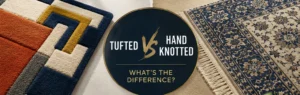
Hand tufted carpets
A hand tufted rug is made by punching wool or synthetic yarn through a stretched cotton backing using a tufting gun, then securing the pile with latex and adding a secondary backing fabric. It’s a faster process than knotting, which is why hand tufted rugs cost less while still looking handmade.
Hand tufted carpets can be carved for texture (high-low carving creates a pattern that catches light differently depending on the angle), and they come in a much wider range of colors since the yarn is dyed to order more easily than in knotted production.
The trade-off is the latex backing. Over many years, especially in humid climates, the latex can dry out and the pile can start to release. That’s usually a decade-plus timeline, not something you’ll see in year one or two, but it’s worth knowing if you’re comparing lifespan to hand knotted.
Jute carpets
Jute is a natural plant fiber, and a jute kaleen for floor has a rustic, textured look that works well in casual and coastal-style rooms. It’s breathable, biodegradable, and holds up well in high-traffic areas because the fiber itself is coarse and resists crushing.
Jute isn’t the best choice for spill-prone spaces. It absorbs liquid quickly and can stain or develop a musty smell if it stays wet. We’d steer you away from jute for a dining room with young kids, but it’s a strong pick for a study, hallway, or a covered patio.
Shaggy carpets
A shaggy rug has a long, loose pile, usually 2 inches or more, which is what gives it that deep, sink-your-feet-in feel. Round shaggy rugs work well as a soft landing spot next to a bed, and runner shaggy rugs are popular for hallways where you want warmth underfoot without much visual weight.
The long pile does trap more dust than a low-pile rug, so shaggy carpets need more frequent vacuuming, ideally with a setting that won’t pull at the fibers. We recommend a vacuum with adjustable height or a handheld attachment rather than a standard beater bar, which can stress the yarn over time.
Modern Persian carpets
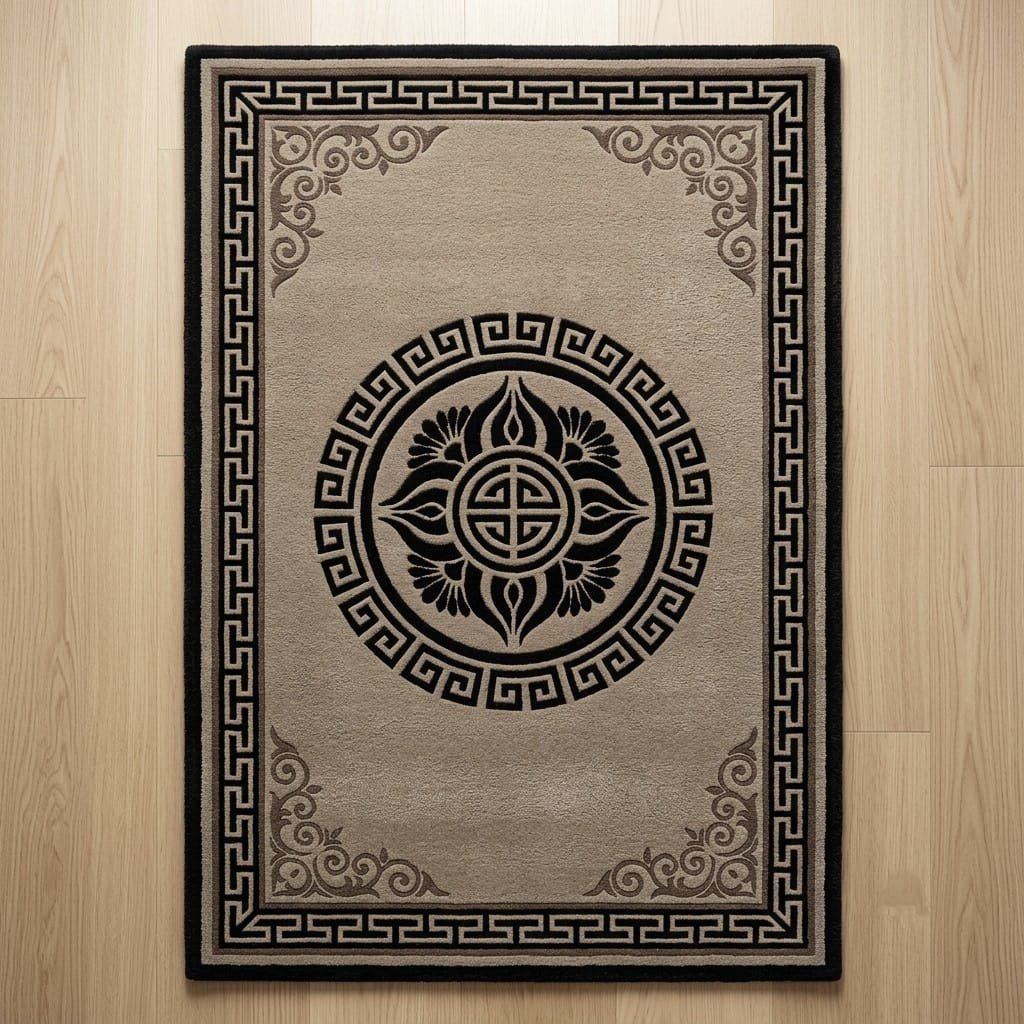
A modern Persian carpet takes traditional Persian motifs (medallions, florals, intricate borders) and reworks them in updated color palettes and simplified layouts. These are usually hand knotted or hand tufted in wool, sometimes with silk highlights for extra sheen in the pattern details.
They work well as a statement piece in a living room or formal dining space where you want something with visual history but not a literal antique-style rug.
Kaleen for floor by room
Each room asks something different from a rug. Here’s what we’d actually recommend based on what customers come back and tell us worked.
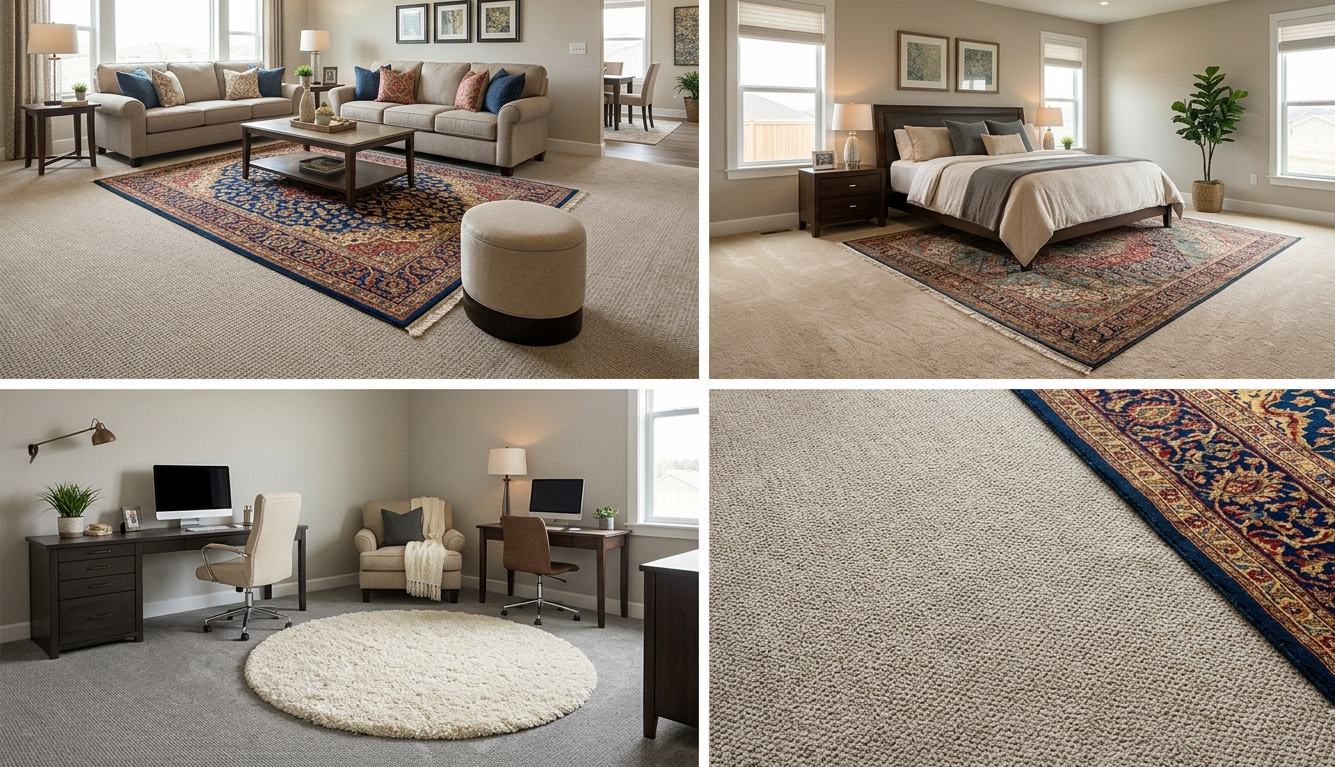
Living room. Go big. The rug should be large enough that at least the front legs of your sofa and chairs sit on it, ideally all four legs on larger rugs. A hand knotted or modern Persian carpet works well here because it’s the room guests see first.
Bedroom. Comfort matters more than durability here since traffic is lower. A shaggy or hand tufted rug placed under or beside the bed means your first step out of bed lands somewhere soft. For a queen bed, an 8×10 rug usually leaves enough exposed flooring around the edges to look intentional rather than cramped.
Dining room. Pick a low pile, durable option like a flatweave or tight hand tufted rug. Chairs need to slide in and out without catching on the pile, and the rug should stay large enough that all four chair legs remain on it even when pulled out from the table.
Hallways and entryways. Runners take the wear here so your hard flooring doesn’t. A hand knotted runner or a tightly woven jute runner both hold up well in a space that gets constant foot traffic and little rest.
Home office. A low pile, solid-toned rug cuts down on echo without adding visual clutter behind you on video calls. This is also a good spot for a jute rug if the room doesn’t see spills.
Kids’ room. Durability and easy cleaning matter most. A hand tufted rug in a mid-tone color hides everyday marks better than something very light or very dark.
How to choose the right size
Rug size mistakes are one of the most common issues we help customers fix. A rug that’s too small makes a room look disconnected, like the furniture is floating separately from the floor covering.
A quick way to check: measure your seating or table arrangement, then add at least 24 inches of rug on each side. For a standard queen bed setup, an 8×10 or 9×12 rug is usually the right range. For a large living room with a sectional, you may need a 10×14 or a custom size.
Custom sizing takes longer to produce, since it usually means the rug is made to order rather than pulled from stock. If you’re working with a designer on a specific room layout, build in extra lead time for this.
Caring for your kaleen for floor
Maintenance depends heavily on the material, but a few habits apply across the board.
- Vacuum at least twice a week, more in high-traffic rooms. This stops dirt from working its way down into the base of the pile, which is where most premature wear starts.
- Blot spills immediately, don’t rub. Rubbing pushes the stain deeper and can distort the pile, especially on wool and jute.
- Rotate the rug every 6 to 12 months if it gets direct sunlight. UV exposure fades color unevenly, and rotating keeps that fade consistent across the whole rug instead of one faded patch.
- Use a rug pad. It stops slipping, adds cushioning, and reduces the friction that wears down backing fibers over time.
- Get wool rugs professionally washed every 12 to 18 months. Home vacuuming removes surface dust, but it doesn’t get out embedded dirt or allergens the way a proper wash does. This matters more for households with pets or allergy sufferers.
One thing worth knowing: new wool rugs, especially hand tufted ones, often shed for the first few weeks. That’s normal. It’s loose fiber left over from finishing, not a sign of a defect, and it settles down with regular vacuuming.
Common mistakes when buying a kaleen for floor
Buying too small. As covered above, undersized rugs are the most common complaint we hear after the fact.
Choosing pile height without thinking about the room’s use. A deep shaggy pile looks great in a bedroom, but it’s a poor fit under a dining table where chairs need to move freely.
Skipping the rug pad. It seems optional until the rug starts sliding on a hard floor or wearing thin faster than expected.
Not asking about backing material. Latex-backed rugs and cotton-backed rugs behave differently in humid climates. If you live somewhere with high humidity, ask before you buy.
Frequently asked questions
What is the best kaleen for floor for a high-traffic area?
Hand knotted rugs and low-pile hand tufted rugs both hold up well in high-traffic spots. Jute is also a strong option as long as the area doesn’t see regular spills.
Does a kaleen for floor improve indoor air quality?
It can, as long as you vacuum regularly. The fibers trap dust and pollen instead of letting them circulate, but that dust needs to actually be removed on a schedule, or the rug just holds onto it.
How often should a wool rug be professionally cleaned?
Every 12 to 18 months for most households, more often if you have pets or live somewhere dusty.
Is hand tufted or hand knotted better?
Hand knotted lasts longer and has no backing to fail, but it costs more and takes longer to produce. Hand tufted gives you a similar handmade look for less money and a shorter lead time. Neither is objectively better; it depends on your budget and how long you want the rug to last.
Can jute rugs get wet?
They can handle light moisture, but standing water or repeated spills will stain the fiber and can lead to a musty smell. Keep jute out of rooms where spills are likely.
Choosing your kaleen for floor
The right rug comes down to matching the construction to the room. Hand knotted for longevity and a formal living room. Hand tufted for a handmade look at a lower price point. Jute for texture and breathability in low-spill spaces. Shaggy for comfort where traffic is light.
If you’re between two options, think about how the room actually gets used day to day, not just how it looks in a photo. That’s usually what decides it.