Exploring Unique Carpet Designs for Homes
We often call the sofa the heart of the living room, but the carpet is its soul. According to spatial designers, this foundational piece acts as the “Room Anchor”—an invisible boundary that tells your feet exactly where comfort begins. Rather than just masking a cold hardwood floor, it psychologically pulls scattered furniture together into a unified, inviting conversation area.
Facing the “Boring Room Dilemma” frequently pushes homeowners toward expensive renovations, yet the most dramatic solution often lies right beneath their toes. Interior architects increasingly refer to the floor as the “Fifth Wall,” treating it as a massive, underutilized canvas waiting to be brought to life. We have thankfully moved far past the endless sea of 1990s wall-to-wall beige. Today’s unique carpet designs embrace an “Art You Walk On” philosophy, transforming basic floor coverings into highly personal, expressive masterpieces.
Contemporary simply describes designs of the current moment, rather than a fixed historical period. Unlike rigid traditional looks, modern carpet styles continually adapt to our everyday desire for both visual harmony and barefoot durability. This ongoing evolution sets the perfect stage for exploring how color, size, and layout work in tandem to completely change a room’s atmosphere.
In practice, successful contemporary carpet designs rely on three specific pillars: innovative texture, bold geometry, and mindful sustainability. High-low piles—where some fibers are deliberately taller than others—create physical shadows for subtle depth, while eco-friendly threads ensure your floor art protects the environment. Recognizing these core elements makes choosing the perfect piece an inspiring, confident journey.
How Geometric Designs Manipulate Room Size and Energy
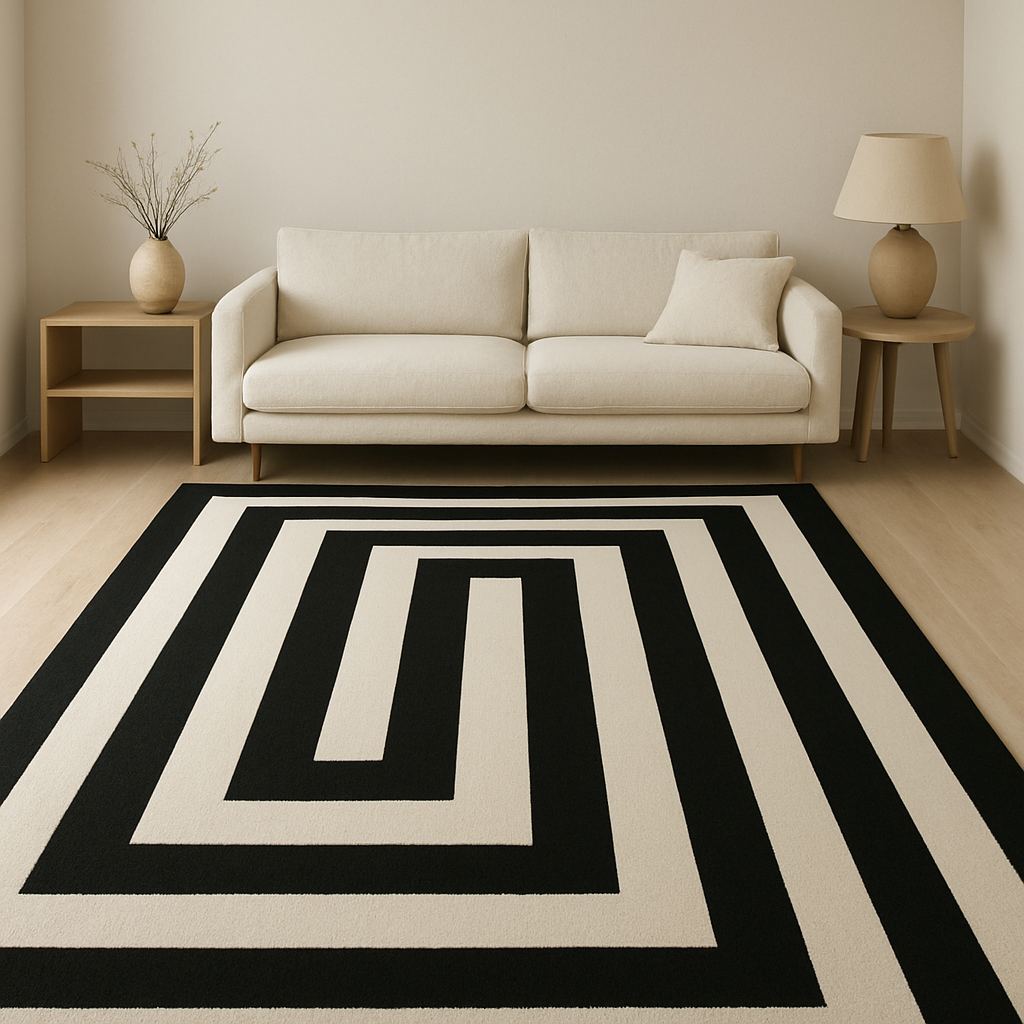
Despite the common fear of mixing bold patterns, small room dimensions can actually appear larger if you apply the right visual rules. The secret is “visual leading lines”—paths built into a design that subconsciously guide your eyes across the floor. When you lay down minimalist geometric area rug patterns featuring strong horizontal stripes, your gaze naturally follows those tracks outward, tricking the brain into thinking the walls are further apart.
Different structural choices dictate the entire energy of your space. Consider how these three geometric carpet designs alter a room’s vibe:
- Lines: Promote calm order, naturally anchoring chaotic family living spaces.
- Chevrons: Inject kinetic energy and forward momentum, making home offices feel active.
- Hexagons: Create organic balance, immediately softening the edges of harsh, boxy furniture.
To prevent these strong shapes from feeling cluttered, contemporary weavers utilize “negative space” in textiles—the deliberate, unpatterned background areas that give the main design room to breathe. A large-scale hexagon surrounded by plenty of empty canvas expands a cramped bedroom beautifully. Conversely, tiny, tightly packed triangles will visually shrink that exact same floor because the eye has nowhere to rest.
While crisp math offers one brilliant way to modernize a floor, other striking contemporary pieces look backward for inspiration. If sharp geometry feels too rigid for your personal sanctuary, the next design evolution softens these boundaries entirely, gracefully shifting into the “erased” aesthetic: giving Persian heritage a modern soul.
The ‘Erased’ Aesthetic: Giving Persian Heritage a Modern Soul
Classic Persian carpet designs often carry a formal, heavy presence that can easily overwhelm minimalist spaces, but a striking contemporary technique elegantly solves this dilemma. Weavers now utilize “erased patterns”—a method where the intricate medallions and floral borders of a traditional rug appear intentionally faded or partially rubbed away. This process creates an instant “patina,” the beautifully weathered look normally achieved through decades of gentle aging. By stripping away high-contrast colors, these pieces perfectly bridge the gap between historic craftsmanship and airy, modern minimalism.
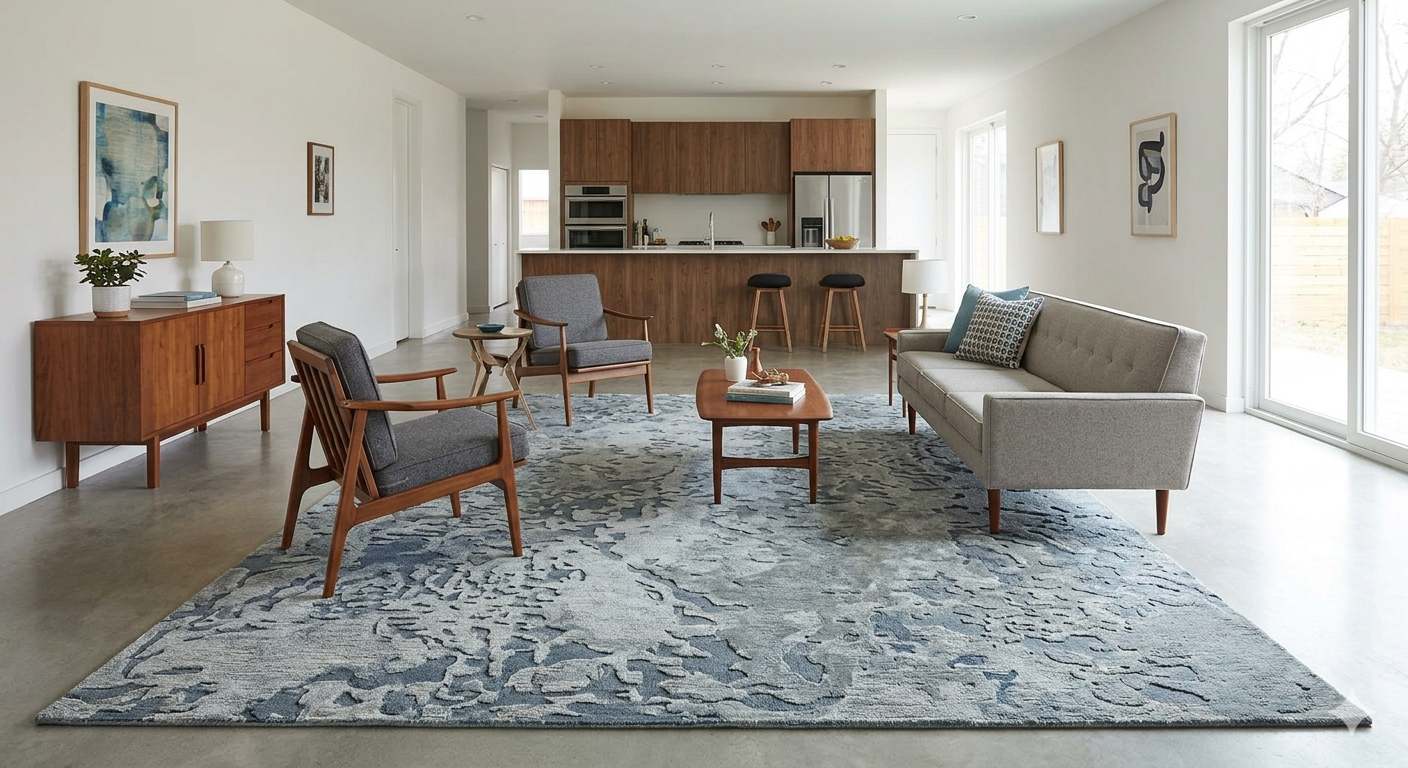
Beyond their visual appeal, these rugs act as incredibly forgiving additions to busy, high-traffic households. The distressed aesthetic naturally disguises everyday wear, pet hair, and minor spills within its beautifully mottled, uneven coloring. When woven in updated, muted palettes like slate gray or washed denim, they serve as the perfect foundation for mid-century modern interior decor trends and raw industrial spaces. The faded motifs whisper rather than shout, allowing your sleek furniture to remain the room’s true focal point.
Choosing these stylish carpet options proves that modern floors do not need to abandon the past to feel fresh and relevant. Yet, while reinventing vintage patterns brilliantly transforms the visual mood of your home, a parallel design revolution is happening deep within the fibers themselves, shifting focus away from heritage aesthetics and looking instead toward the natural world outside our windows.
Walking on Nature: Why Biophilic and Eco-Friendly Carpets are the New Luxury
Modern homes are increasingly adopting biophilic design elements—a concept focusing on bringing the outdoors inside to lower stress and improve mood. Rather than sealing ourselves off from nature, we are grounding our spaces with natural textures and prioritizing “Low-VOC” materials, which simply means they release fewer harsh chemical odors into your air.
This push for wellness has sparked a massive shift toward eco-friendly carpets. Contemporary designers are proving that true luxury involves “circularity”—meaning a product is intentionally designed to be recycled rather than discarded. Today’s sustainable organic fiber textile floorings do not just look stunning; they actively reduce environmental waste while providing incredible softness.
When shopping for these mindful additions, you will encounter a mix of harvested materials and brilliant recycling innovations:
- Wool (High Durability): The original resilient wonder, perfect for busy living rooms.
- Recycled PET (High Durability): Woven from rescued plastics, this circular marvel surprisingly mimics the feel of silk.
- Seagrass (Medium Durability): A water-resistant plant fiber excellent for messy dining areas.
- Jute (Moderate Durability): Incredibly soft but delicate, making it ideal for cozy barefoot bedrooms.
Beautifully sourced materials provide a foundational connection to the earth, but how they are woven together ultimately dictates the room’s energy. The real magic happens when weavers manipulate these natural fibers into varying heights to create striking three-dimensional shadows.
stract expressionist inspired floor art directly into a solid, unpainted canvas. Through varying fiber heights, a simple cream carpet suddenly resembles a beautiful, weathered stone surface. This dimensional approach is perfect for anyone who loves a clean, minimalist aesthetic but wants to avoid a living room that feels flat or cold. The physical texture gives the eye something fascinating to explore while maintaining a beautifully calming atmosphere.
Beyond looking stunning, these deeply textured pieces offer immense practical value through their sound dampening properties. If your living space features hardwood floors and bare walls, a thick, multi-dimensional rug acts as a natural acoustic sponge that instantly eliminates harsh echoes. Once you establish this quiet, textured foundation, your next crucial step involves solving the “floating furniture” crisis: professional sizing and layering secrets.
Solving the ‘Floating Furniture’ Crisis: Professional Sizing and Layering Secrets
Ever walked into a space where the sofa and chairs seem to drift aimlessly across the floor? Designers refer to this visual disconnect as “floating furniture syndrome.” Choosing the correct rug size for living room layouts immediately cures this by physically connecting your seating group into one cohesive zone.
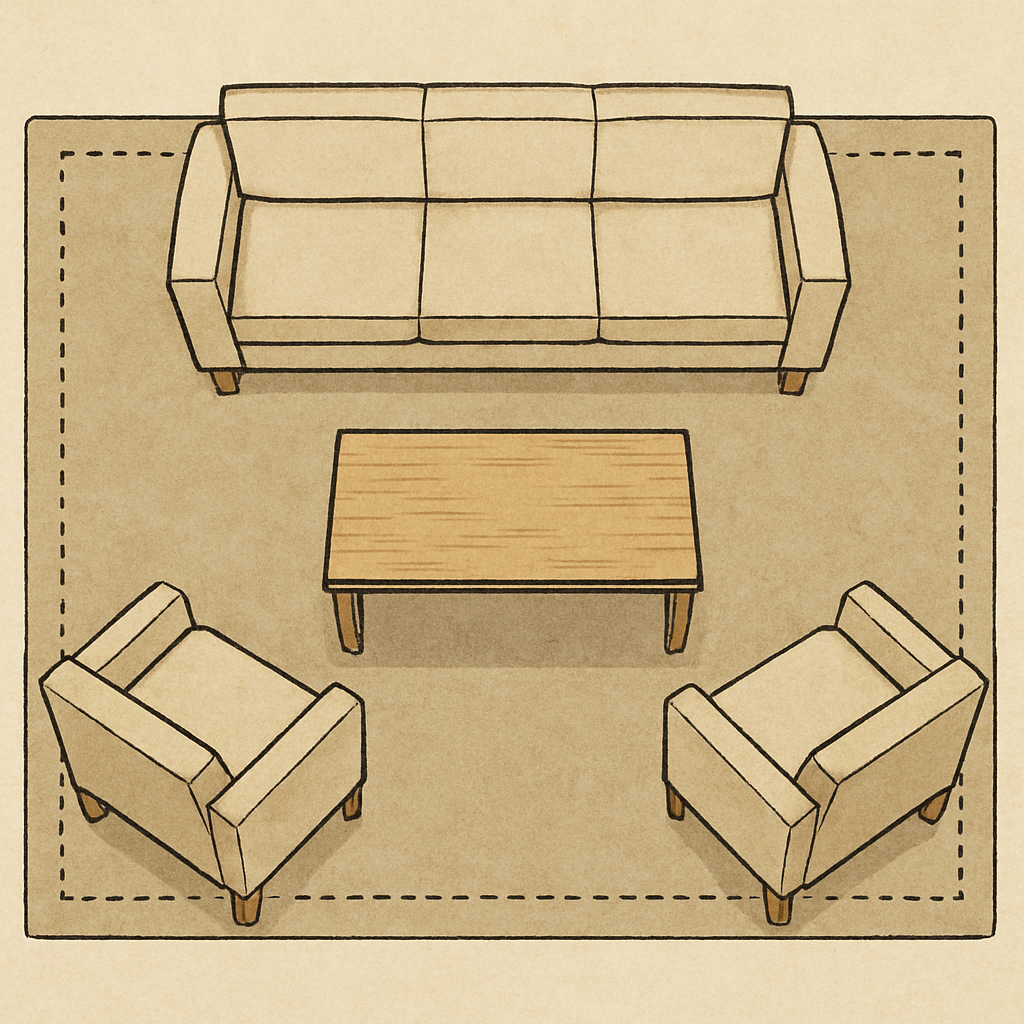
Fixing this requires “anchoring”—a fundamental design rule ensuring the front legs of major furniture pieces sit firmly on the textile. For optimal aesthetics, calculate a 12-to-18-inch border of bare floor between the edge of your rug and the surrounding walls, beautifully framing the space without making it feel cramped.
To guarantee perfect proportions throughout your entire home, rely on these ‘Golden Rules’ of rug sizing:
- Living Area: Select a piece large enough to tuck under the front half of your sofa and accent chairs.
- Dining Room: Extend the rug at least 24 inches beyond the table so chairs remain level when pulled out.
- Bedroom: When browsing carpet designs for bedroom spaces, slide a large rug perpendicularly under the bottom two-thirds of the bed frame.
Budget-conscious decorators can master this scale through the “layering” technique. Try placing a smaller, highly patterned contemporary piece over an inexpensive, oversized jute mat, or even try layering area rugs over wall-to-wall carpeting to add instant personality to rentals. Once your layout is beautifully grounded, the next priority is ensuring it survives daily life—which brings us directly to the intersection of modern durability and pet-friendly design.
Durability Meets Style: Selecting Pet Friendly Stain Resistant Floor Covering
Balancing aesthetics with family life requires comparing wool and synthetic fiber durability. Natural wool is phenomenal for stylish living rooms because it contains lanolin, a naturally occurring oil acting as a built-in barrier against minor spills. However, for a playroom where muddy paws and spilled drinks roam free, modern synthetics offer an uncompromising defensive line.
The secret behind these resilient pieces is a manufacturing method known as “solution dyeing.” Imagine the difference between a radish and a carrot: a traditionally dyed fiber is like a radish, where only the outside carries color, but a solution-dyed fiber is colored all the way through like a carrot. This saturation creates superior pet friendly stain resistant floor coverings, allowing you to aggressively scrub away harsh accidents without bleaching the vibrant hues.
Even with top-tier technology, some stains occasionally win the battle, which is why modular carpet tile designs are becoming a residential favorite. These interlocking squares form what looks perfectly like a seamless area rug, offering a brilliant fail-safe—if disaster strikes, you simply swap the single ruined tile instead of replacing the entire carpet. These clever industrial solutions naturally prompt a larger question: how do these modern, machine-made conveniences measure up against traditional handcrafted artistry?
Artisanal vs. Industrial: Deciphering the Value of Modern Rug Craftsmanship
Stepping into a showroom, the difference between an everyday floor covering and a “living asset” comes down to hand-knotted vs machine-made rug quality. While power-loomed pieces offer quick style updates, true hand-knotted rugs are heirlooms built to physically hold their value over time. Today’s artisanal craftsmanship in modern rug weaving pairs ancient techniques with sophisticated aesthetics, trading the bright synthetic tones of the past for grounded luxury palettes featuring warm terracotta, soothing sage, and deep navy.
Protecting your investment requires checking under the hood before you buy. Flip the corner of the rug over and look for these four indicators:
- The Fringe Test: True fringe is the naturally exposed skeleton of the foundational threads, never just sewn or glued onto the edges.
- Back-Side Knot Visibility: The pattern should be vividly clear on the back, displaying distinct, slightly uneven individual knots.
- The Fold Bend: Hand-crafted foundations fold easily and fluidly, unlike the stiff, glue-backed canvas of tufted imitations.
- Organic Imperfections: Subtle color variations prove human hands—not industrial machines—dyed and spun the natural fibers.
These structural secrets demystify why certain luxury carpet styles command premium prices. Recognizing true artistry allows you to confidently invest in walkable art rather than a disposable accessory. Armed with this knowledge, you are ready for your design roadmap: transforming your home with the right contemporary carpet.
Your Design Roadmap: Transforming Your Home with the Right Contemporary Carpet
You are ready to treat flooring as your room’s anchor rather than a mere afterthought. When shopping for contemporary carpet designs, trade fleeting trends for timeless investments using a simple mental sequence. First, define the room’s mood. Next, inspect fiber quality for durability. Third, seek high-low textures that add depth. Fourth, visualize the colors under your home’s lighting. Finally, trust your instincts—stylish carpet options should instantly make you want to walk barefoot.
Embracing the “Fifth Wall” mindset transforms how you approach styling, helping you confidently spot unique carpet designs that marry aesthetic beauty with tactile joy. Before getting swept away by striking textures or organic shapes, grab a tape measure. Mapping out your exact room dimensions is the most crucial step to take before you ever look at a pattern.