
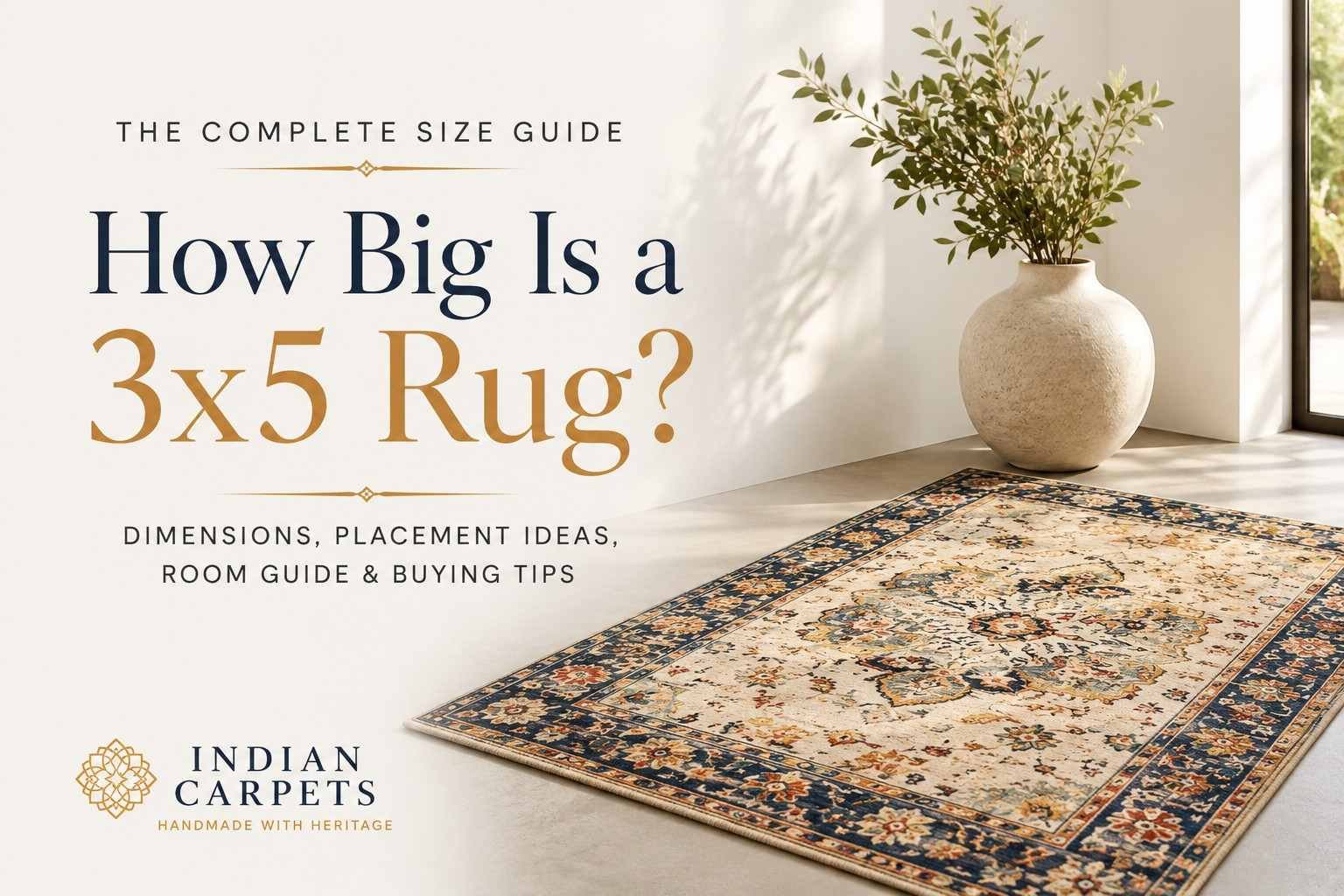
A 3×5 rug is 36 inches wide by 60 inches long. That’s 91 x 152 cm, or about 15 square feet of floor coverage.
It’s one of the most useful rug sizes there is. Small enough to tuck into a reading nook, big enough to actually change how a room feels. If you’ve been staring at an empty entryway or a cold bedroom floor wondering what size to buy, this is usually the answer.
Below: exact dimensions, where a 3×5 area rug actually works in a home, which materials hold up best, and the mistakes that trip most people up before they buy.
3×5 rug size in inches and cm
| Measurement | Size |
|---|---|
| Width | 3 ft / 36 in / 91 cm |
| Length | 5 ft / 60 in / 152 cm |
| Area | 15 sq ft / 1.39 m² |
Handmade rugs can be off by an inch or two from these numbers. That’s not a defect. It’s a byproduct of a person weaving the thing by hand instead of a machine stamping it out.
What a 3×5 carpet is actually for
Bigger rugs like an 8×10 or 9×12 anchor a whole room. A 3×5 rug does something different: it marks out one specific spot. Under a side table, beside a bed, in front of a sink. It’s an accent, not a foundation.
That makes it the easiest rug size to live with. Light enough to move on your own, cheap enough (relative to a 9×12 handmade piece) that you can actually experiment with color and pattern, and small enough to fit almost anywhere.
3×5 rug vs other standard rug sizes
| Rug size | Inches | Best for |
|---|---|---|
| 2×3 | 24 x 36 | Doormats, bathrooms |
| 3×5 | 36 x 60 | Entryways, bedrooms, kitchens, offices |
| 4×6 | 48 x 72 | Small living rooms, guest rooms |
| 5×7 | 60 x 84 | Bedrooms, dining nooks |
| 6×9 | 72 x 108 | Medium living rooms |
| 8×10 | 96 x 120 | Large living rooms |
| 9×12 | 108 x 144 | Open-plan spaces, formal dining |
If you’re deciding between a 3×5 and a 4×6, ask what the rug needs to do. Define a small zone (entryway, reading chair, one side of the bed)? Go 3×5. Cover most of a small room’s floor? Size up.
Where to put a 3×5 area rug
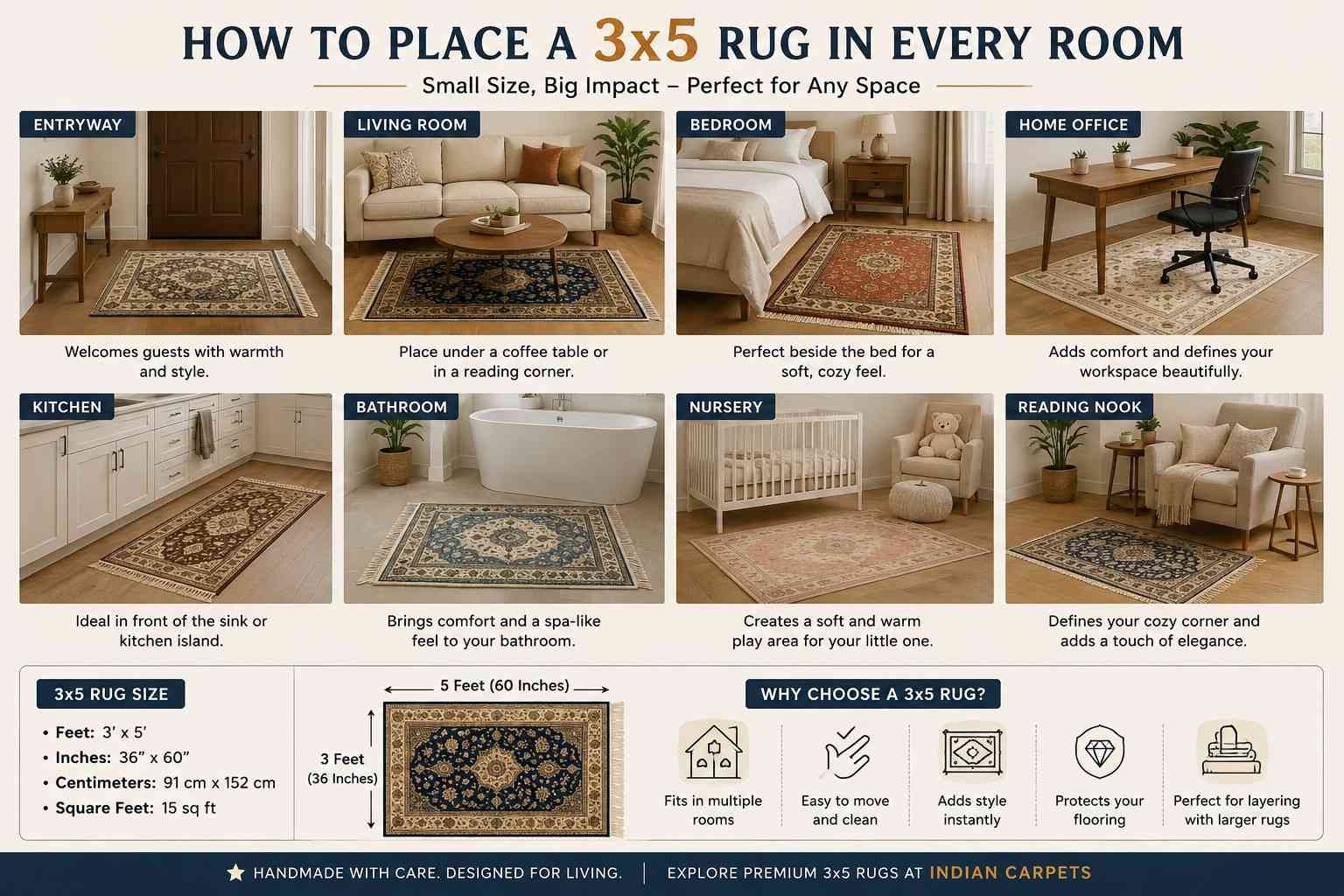
Bedroom. This is where a 3×5 earns its keep. Lay it beside the bed so your feet land on it instead of cold flooring, or run it horizontally across the foot of the bed to frame the whole setup. Works in a nursery too, as a soft spot for tummy time.
Entryway. First thing anyone sees when they walk in. A wool or flat-weave 3×5 rug here traps dirt before it spreads to the rest of the house, and it fits most foyers without blocking a door swing.
Living room. Not big enough to sit an entire sofa set on, but great under a coffee table, beside an accent chair, or in front of a fireplace. A trick worth stealing from interior designers: layer a patterned 3×5 over a larger neutral rug. Instant depth, and you get to use two rugs you love instead of picking one.
Kitchen. In front of the sink or the stove, standing on a rug beats standing on tile for the twenty minutes it takes to cook dinner. Stick to cotton or flat-weave here since it’s easier to keep clean.
Home office. Under the desk or chair, a 3×5 rug protects the floor from caster wheels and takes the edge off the room’s acoustics. Wool is the better pick if you’re on video calls all day.
Bathroom. Beside the tub or in front of the vanity, a handcrafted rug reads a lot more like a spa than a plastic bath mat. Pair it with a non-slip pad. Non-negotiable on tile.
Choosing the right material
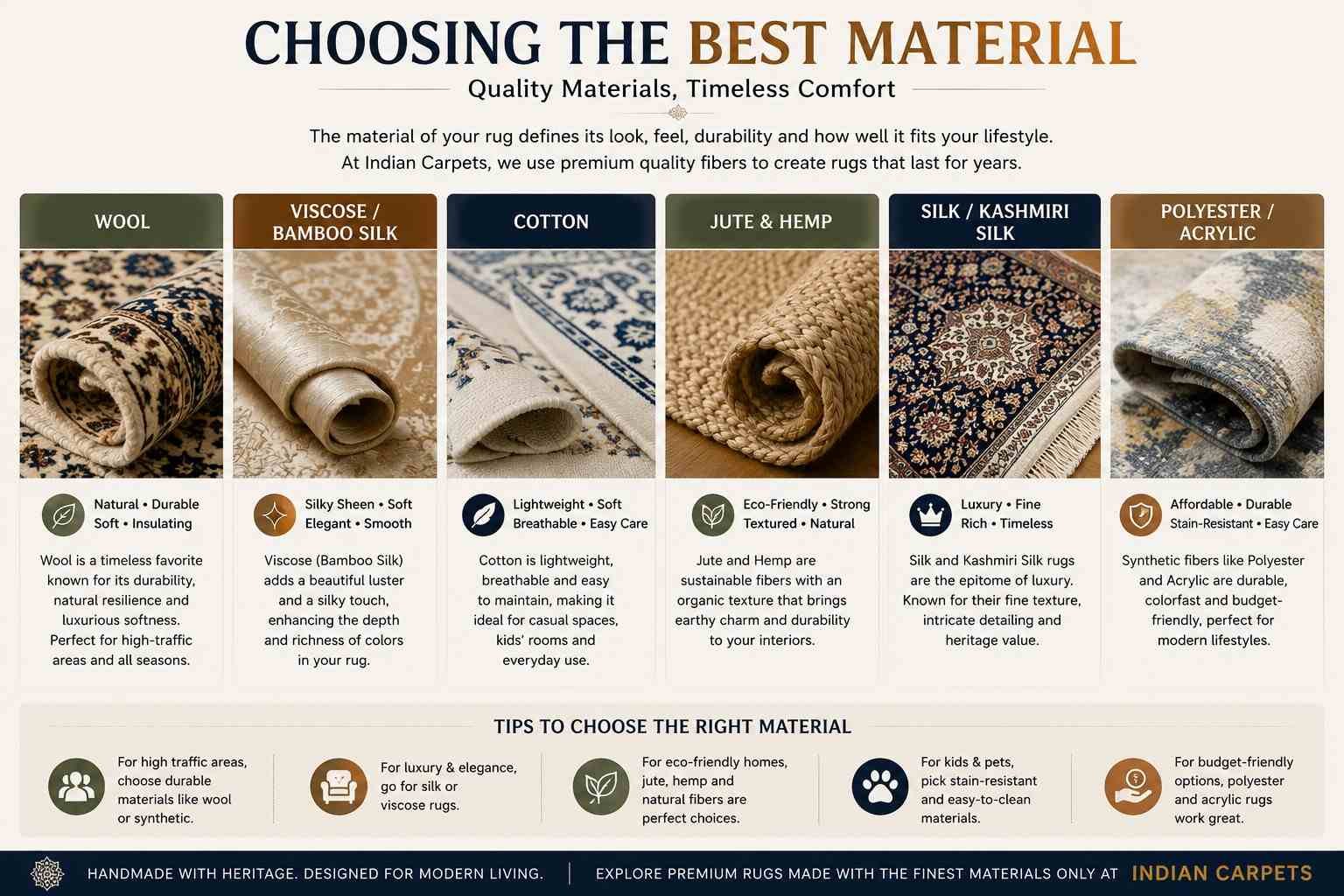
Wool. The default for good reason. Durable, naturally stain-resistant, soft, and it insulates a room in winter. Works in almost every setting: bedroom, office, living room.
Bamboo silk. Has a natural sheen that catches light well. Best in a formal living room or a bedroom you want to feel a little more luxurious.
Kashmiri silk. Hand-knotted, intricate, and genuinely heirloom-quality. This is the rug you buy once and pass down.
Cotton. Lightweight, easy to wash, budget-friendly. Good call for kitchens, bathrooms, and kids’ rooms where spills happen.
Jute. Textured, sustainable, and it leans into a farmhouse or coastal look. Not the softest underfoot, but it brings a natural, organic feel that wool can’t quite match.
Best colors for a 3×5 rug
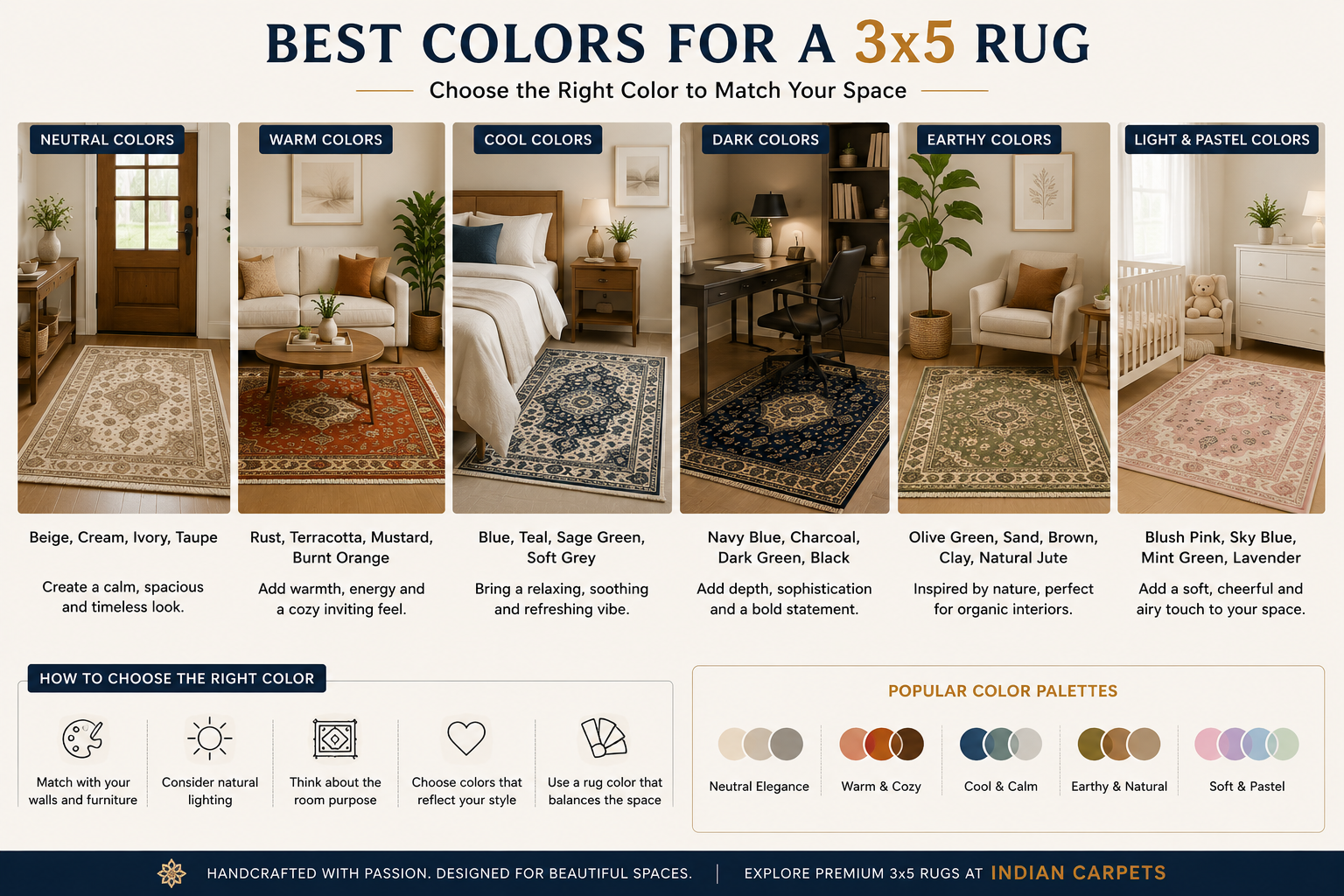
Neutrals (ivory, beige, taupe, soft gray) make a small room feel bigger and go with almost any furniture. Safe choice if you’re not sure yet.
Bold colors (navy, emerald, rust, mustard) turn the rug into the focal point of the room. Good move if your furniture is already neutral and needs something to anchor it.
Earth tones (olive, camel, clay, forest green) sit somewhere in between. They pair especially well with wood furniture and give a room warmth without shouting.
Hand-knotted vs hand-tufted vs flat-weave
A hand-knotted rug is tied knot by knot, entirely by hand. Slower to make, but it can last 50+ years and only gets more character with age.
A hand-tufted carpet gets you a thick, plush pile at a faster production time and a lower price point than hand-knotted. Good middle ground for most homes.
A flat-weave rug has little to no pile, which makes it the easiest to clean and the best choice for high-traffic spots like kitchens and entryways.
Buying tips: what to check before you order
Measure the actual floor space first. Painter’s tape on the floor, outlining 3 feet by 5 feet, takes two minutes and saves you from a rug that’s the wrong shape for the spot you had in mind.
Leave 12 to 18 inches of bare floor around the rug where you can. It reads as intentional instead of cramped.
Check that doors still swing open once the rug’s down, especially near entryways.
Buy a rug pad. It stops slipping, adds cushioning, and protects the floor underneath. Skipping it is the most common regret we hear about after the fact.
Caring for a handmade 3×5 rug
Vacuum once or twice a week, and skip the rotating brush head on delicate weaves. Blot spills immediately instead of rubbing them in. Rotate the rug every 3 to 6 months so it wears evenly and doesn’t fade unevenly from sunlight. Get it professionally cleaned every 12 to 18 months, especially if it’s wool or silk.
Custom 3×5 rugs
If none of our ready-made designs fit what you’re picturing, we make custom rugs to order: exact dimensions, material, color, pattern, and pile height, all specified by you. It’s slower than buying off the shelf, but it means the rug actually matches the room instead of the other way around.
Browse our Wool Rugs, Hand Knotted Rugs, and Custom Rugs collections
FAQs
How big is a 3×5 rug?
A 3×5 rug measures 3 feet wide by 5 feet long, which equals 36 × 60 inches or approximately 91 × 152 cm. It covers 15 square feet, making it suitable for entryways, bedside areas, reading corners and other smaller spaces.
What is a 3×5 rug size in inches?
36 inches wide by 60 inches long. Some sellers round this to 3’x5′, same size either way.
Is a 3×5 rug too small for a living room?
Not for accent use. It’s too small to anchor a full seating arrangement, but it works well under a coffee table or layered over a larger rug.
What’s the best material for a 3×5 rug in a kitchen?
Cotton or flat-weave. Both clean up easily and hold up to daily foot traffic.
Can I use a 3×5 area rug in a bedroom?
Yes, and it’s one of the most common spots for this size. Lay it beside the bed or across the foot of it.
Is a 3×5 carpet the same as a 3×5 rug?
Yes. “Carpet” and “rug” get used interchangeably for this size online, but they mean the same dimensions.
How much floor does a 3×5 rug cover?
About 15 square feet, which is enough to define a spot without covering most of a room.
What size room does a 3×5 rug fit best?
Smaller rooms and specific zones: entryways, home offices, reading nooks, and one side of a bed. In a large open room, it’ll look more like an accent than a centerpiece, which is exactly what it’s meant to do.
Do handmade 3×5 rugs vary in size?
A little. Because they’re woven by hand and not machine-cut, sizes can be off by an inch or two from the listed dimensions. That’s normal.
How long does a handmade rug last?
30 to 50 years with normal care. Well-made hand-knotted rugs often outlast that.
Do I need a rug pad under a 3×5 rug?
Yes, especially on hardwood or tile. It stops slipping and adds a layer of cushioning.
What’s the difference between a 3×5 rug and a 2×3 rug?
A 2×3 is closer to doormat size, mostly used at a front door or in a bathroom. A 3×5 covers enough ground to actually define a seating spot or a bedside area.
Final Thoughts: Is a 3×5 Rug the Right Size for Your Space?
A 3×5 rug is a practical choice for smaller spaces where you want to introduce warmth, comfort, and style without covering the entire floor. Measuring 36 × 60 inches (approximately 91 × 152 cm), it works beautifully in entryways, beside a bed, beneath a reading chair, or in a compact seating area. Before purchasing, measure your available floor space and consider how the rug will sit alongside your furniture.
The right design can make even a small area feel more inviting. Explore the rug collection at Indian Carpets to discover styles that complement your interior, or browse our hand-tufted carpets for a soft, textured finish. If you need a specific size, shape, colour, or design, explore our custom rugs to find a solution tailored to your space.
With accurate measurements and a design that suits your room, a 3×5 rug can be a simple yet effective way to bring your interior together.