How to Tell If a Rug Is Hand Knotted: A Complete Buyer’s Guide
How to tell if a rug is hand knotted is one of the most important questions homeowners ask when investing in a premium carpet. With machine-made rugs flooding the market, identifying genuine craftsmanship has become increasingly difficult.
A true hand knotted carpet is more than a decorative floor covering. It represents centuries of weaving tradition, thousands of carefully tied knots, and months of dedicated artisan work. These rugs are admired worldwide for their durability, beauty, and investment value.
At Indian Carpets, every handcrafted rug reflects India’s rich weaving heritage. Whether you’re furnishing a luxury living room, elegant bedroom, modern office, or contemporary studio, understanding how to tell if rug is hand knotted will help you choose a piece that lasts for generations.
In this guide, you’ll discover the key signs of an authentic hand-knotted rug, understand the differences between handmade and machine-made carpets, and learn why discerning homeowners continue to choose handcrafted rugs over mass-produced alternatives.
What Is a Hand-Knotted Rug?
A hand knotted rug is created by tying individual knots by hand onto a foundation of warp and weft threads. Unlike machine-made carpets, which can be produced within hours, a hand-knotted rug may take several months or even years to complete.
Each knot contributes to the rug’s pattern, texture, and durability. The process requires remarkable skill, patience, and attention to detail.
Many of the world’s finest rugs are crafted using premium materials such as:
- Indian Wool
- New Zealand Wool
- Afghan Wool
- Kashmiri Silk
- Bamboo Silk
- Cotton Foundations
When exploring the Hand Knotted Collection at Indian Carpets, you’ll notice the remarkable precision and artistry that define authentic handmade craftsmanship.
Why Hand-Knotted Rugs Are Considered Luxury Investments
Unlike mass-produced carpets, hand-knotted rugs offer lasting value.
Exceptional Longevity
A quality hand-knotted rug can easily last 50 to 100 years with proper care. Many antique rugs passed down through generations remain beautiful today.
One-of-a-Kind Craftsmanship
No two handmade rugs are exactly alike. Small variations make each rug unique and showcase the artisan’s personal touch.
Sustainable Production
Choosing handcrafted rugs supports traditional weaving communities while reducing dependence on large-scale industrial manufacturing.
Timeless Design Appeal
Whether you prefer Modern Rugs, Traditional Carpets, Moroccan Patterns, Geometric Designs, or Abstract Art Rugs, hand-knotted craftsmanship enhances every style.
How to Tell If a Rug Is Hand Knotted: 9 Expert Signs
If you’re wondering how to tell if a rug is hand knotted, these expert techniques will help you identify an authentic piece.
1. Turn the Rug Over
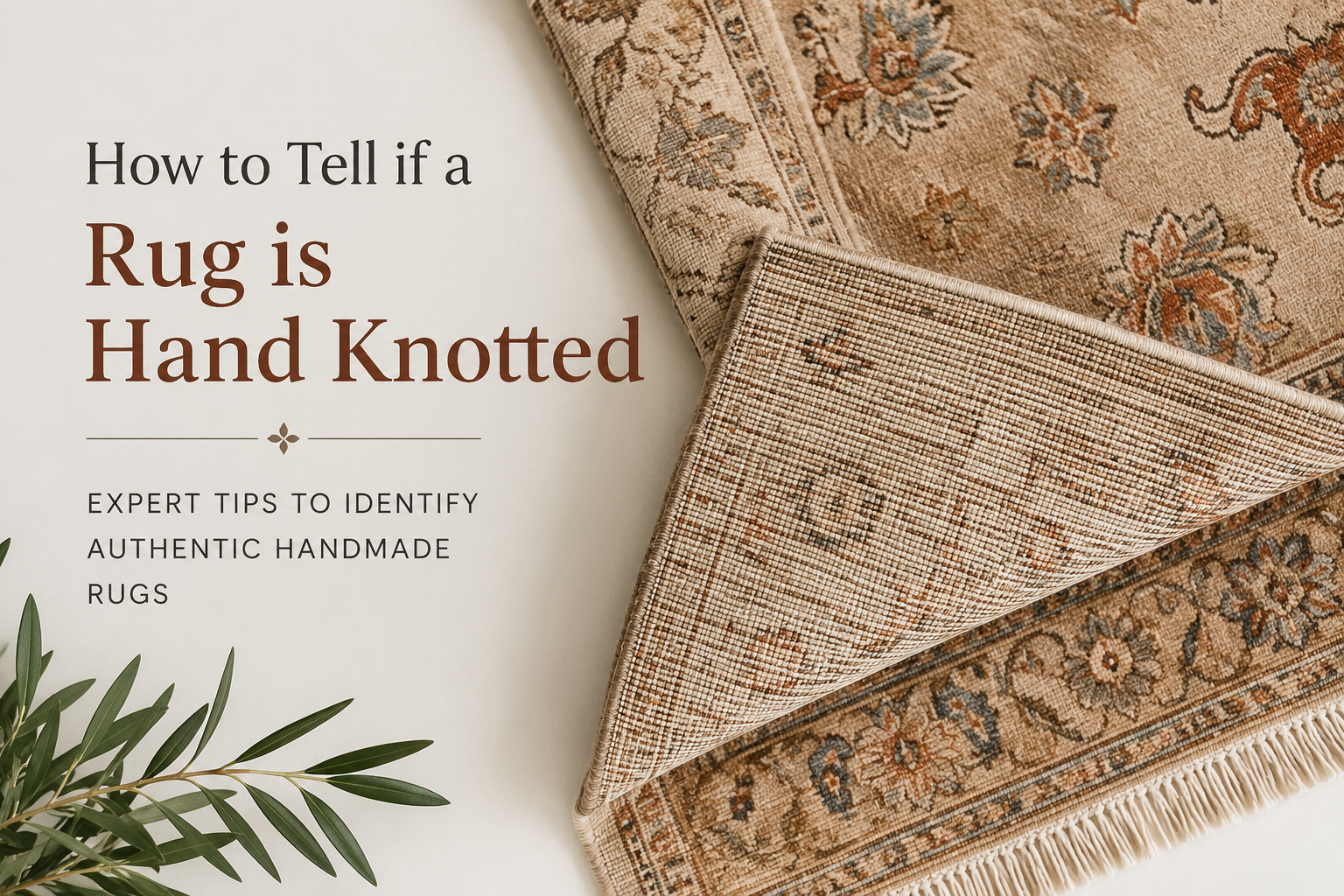
The simplest way to identify a genuine handmade rug is to inspect the back.
A hand-knotted rug will reveal:
- Individual knots
- Visible design details
- Slight irregularities
- Pattern clarity similar to the front
Machine-made rugs often have synthetic backing or uniform stitching that lacks handmade character.
2. Look for Individual Knots
One of the clearest answers to how to tell if rug is hand knotted is found in the knot structure.
Every authentic hand-knotted carpet contains thousands of individually tied knots.
These knots typically appear:
- Slightly irregular
- Handcrafted
- Distinct from one another
Uniform perfection often indicates machine production.
3. Examine the Fringe
The fringe tells an important story.
In genuine handmade rugs, the fringe is actually part of the rug’s foundation.
In machine-made carpets, fringe is usually sewn or glued onto the edges.
This simple test can quickly reveal whether you’re looking at a true artisan-made piece.
4. Feel the Rug’s Weight and Density
Hand-knotted rugs typically feel:
- Dense
- Heavy
- Luxurious
- Substantial underfoot
The thousands of knots create a strong structure that contributes to the rug’s durability.
5. Check for Natural Imperfections
Authentic handmade rugs often contain subtle variations.
You may notice:
- Minor color shifts
- Slight design irregularities
- Small asymmetrical details
These characteristics are signs of human craftsmanship rather than flaws.
6. Fold the Rug
A hand-knotted rug folds naturally due to its woven foundation.
Machine-made carpets often contain stiff backing materials that resist folding.
Flexibility is another useful clue when determining how to tell if a rug is hand knotted.
7. Identify Abrash
Abrash refers to slight color variations within the same dye color.
These tonal shifts occur naturally during traditional dyeing processes and are often considered desirable among rug collectors.
8. Evaluate Knot Density
Higher knot counts generally indicate:
- Greater craftsmanship
- More detailed designs
- Better durability
Premium hand knotted carpets often feature intricate patterns created through exceptionally high knot density.
9. Ask About Origin
Reputable rug sellers should be able to explain:
- Materials used
- Knotting techniques
- Region of origin
- Artisan traditions
At Indian Carpets, every rug carries a story rooted in generations of weaving expertise and cultural heritage.
Hand-Knotted vs Handwoven Rugs
Many homeowners confuse hand-knotted and handwoven rugs.
While both are handmade, their construction differs significantly.
Hand-Knotted Rugs
Hand-knotted rugs involve individually tying every knot onto the foundation.
Benefits include:
- Exceptional durability
- Complex detailing
- Long lifespan
- Higher investment value
Handwoven Rugs
Handwoven rugs are created by weaving fibers through a loom rather than tying knots.
Benefits include:
- Lightweight construction
- Casual aesthetic
- Faster production
- Affordable pricing
If longevity and luxury are priorities, hand-knotted rugs remain the preferred choice.
Hand-Knotted vs Machine-Made Rugs
Understanding this distinction helps buyers avoid costly mistakes.
Hand-Knotted Rugs
- Handmade by artisans
- Natural materials
- Unique character
- Long-lasting durability
- Higher resale value
Machine-Made Rugs
- Factory produced
- Synthetic fibers
- Uniform appearance
- Shorter lifespan
- Lower craftsmanship value
The difference becomes apparent once you learn how to tell if a rug is hand knotted.
Popular Types of Hand-Knotted Rugs
Indian Carpets offers a wide range of styles suited to every interior.
Traditional Hand-Knotted Rugs
Inspired by centuries-old weaving traditions, these rugs feature floral motifs, medallions, and ornamental borders.
Perfect for:
- Formal living rooms
- Heritage homes
- Luxury interiors
Modern Hand-Knotted Rugs
Modern designs emphasize:
- Minimalism
- Abstract patterns
- Neutral palettes
- Contemporary sophistication
These rugs complement modern architecture beautifully.
Geometric Rugs
Geometric patterns create visual interest while maintaining a clean aesthetic.
Ideal for:
- Offices
- Creative studios
- Contemporary homes
Moroccan Rugs
Moroccan-inspired rugs feature bold tribal motifs and relaxed bohemian appeal.
Their versatile designs work well in both modern and eclectic spaces.
Kashmiri Silk Carpets
Among the most luxurious rugs available, Kashmiri silk carpets are celebrated for their intricate detailing and luminous finish.
These masterpieces represent the pinnacle of handcrafted artistry.
Choosing the Right Rug for Different Rooms
Selecting the perfect rug depends on your space and lifestyle.
Living Room Rugs
A large hand-knotted rug can anchor furniture while adding warmth and sophistication.
For contemporary interiors, abstract and geometric designs remain popular choices.
Bedroom Carpets
Bedrooms benefit from soft wool and silk rugs that create a warm, inviting atmosphere.
Neutral palettes often promote a calming environment.
Dining Room Rugs
Durability becomes especially important in dining spaces.
Hand-knotted wool rugs provide excellent resilience while maintaining elegance.
Home Office Rugs
A thoughtfully selected rug can enhance productivity while elevating the visual appeal of your workspace.
Modern and minimalist patterns work particularly well.
Why Buy from Indian Carpets?
Indian Carpets combines traditional craftsmanship with contemporary luxury.
Our collections feature:
- Hand Knotted Rugs
- Hand Tufted Carpets
- Wool Rugs
- Silk Carpets
- Custom Rugs
- Modern Designs
- Traditional Masterpieces
Every piece is crafted with exceptional attention to detail and a commitment to quality.
Customers seeking personalized designs can also take advantage of our custom rug creation services to produce one-of-a-kind statement pieces.
How to Care for a Hand-Knotted Rug
Proper care protects your investment.
Vacuum Gently
Use suction-only settings whenever possible.
Rotate Every Six Months
Rotation promotes even wear and prevents fading.
Avoid Excessive Sunlight
Direct UV exposure can gradually alter colors.
Address Spills Quickly
Blot spills immediately using a clean cloth.
Schedule Professional Cleaning
Periodic professional cleaning helps preserve the rug’s appearance and structure.
The Enduring Value of Handmade Rugs
In an age of mass production, handmade rugs remain symbols of authenticity, artistry, and heritage.
Learning how to tell if a rug is hand knotted empowers you to recognize genuine craftsmanship and invest wisely.
Whether you choose a traditional masterpiece, a modern statement piece, a luxurious Kashmiri silk carpet, or a custom-designed creation, a genuine hand-knotted rug offers beauty that lasts for generations.
At Indian Carpets, we continue to celebrate India’s rich weaving traditions through thoughtfully crafted rugs that combine heritage, luxury, and timeless design.
When you invest in a hand-knotted carpet, you’re not simply decorating a room—you are preserving a centuries-old art form and bringing a piece of that legacy into your home.
Frequently Asked Questions
How to tell if a rug is hand knotted?
Flip the rug over and inspect the back. Genuine hand-knotted rugs display individual knots, handmade fringe, and slight variations in construction.
How to tell if rug is hand knotted or machine made?
Look for hand-tied knots, natural imperfections, flexibility, and integrated fringe. Machine-made rugs often feature synthetic backing and perfect uniformity.
Are hand-knotted rugs worth buying?
Absolutely. Their durability, craftsmanship, and timeless appeal make them one of the best long-term investments in home décor.
How long does a hand-knotted carpet last?
With proper maintenance, a quality hand-knotted rug can last 50 to 100 years or more.
What materials are best for handmade rugs?
Wool, silk, bamboo silk, Afghan wool, New Zealand wool, and cotton foundations are among the most desirable materials.
Why are hand-knotted rugs expensive?
Each rug requires thousands of individually tied knots and months of skilled labor, making every piece a true work of art.